Lilith and Eve: Part One


Lilith (Painting: Dante Gabriel Rossetti)

According to the Jewish Midrash’s  explanation for the two separate accounts of the Creation Story, Adam’s first wife was a woman called Lilith.  She was made of the same soil as man and therefore was his equal.  But when Adam tried to dominate Lilith she rebelled, fled the Garden of Eden, and abandoned her mate to consort with more submissive demons instead.  So God created another mate for Adam and called her Eve.

From the Sixth Century BC, Lilith was portrayed as a female demon who killed infants and threatened women in childbirth, and perhaps because of this association the scriptures began partnering Lilith with Samael (Satan), making her the Queen of Evil.  Her Hebrew name translates into “night creature,” “night monster,” “night hag,” and “screech owl” – and only the three angels Senoy, Sansenoy, and Semangelof can protect against her wicked powers.

In the Middle Ages the Catholic Church identified Lilith (and her daughters, the Lilim) with female succubae – demons who copulate with sleeping men, causing their erotic dreams.  Contrasting with the pure, submissive, Holy Mother, Lilith was a disobedient, lustful sinner who used her sexuality to seduce and ruin men.  Her evil stems from being willful – a dangerous threat to patriarchal order and stability.

Mirrors were the direct entrance into Lilith’s realm.  Vanity allowed Lilith and her daughters to enter an unsuspecting maiden through her eyes, then lure her into all manner of wild, promiscuous behavior.

In some cultures Lilith is the wind-witch.  She brings storms, sickness, and nighttime predators.  She is bird-like – often depicted with talons and wings – and the name Lil is also associated with the Sumerian word for “wind”‘ “air,” or “storm.”

Today, however, some wiccans and occultists worship Lilith as the “first mother.”


Sources:

Brunel, Pierre.  Companion to Literary Myths, Heroes, and Archetypes.  London and New York: Routledge, 1996.

Merriam-Webster’s Encyclopedia of World Religions.  Massachusetts: Merriam-Webster, 1999.

Witcombe, Christopher:  “Eve and the Identity of Women” (7) http://witcombe.sbc.edu/eve-women/7evelilith.html

Copyright © 2022 | KitPerriman.com | All Rights Reserved
 

Love-Nut Magic

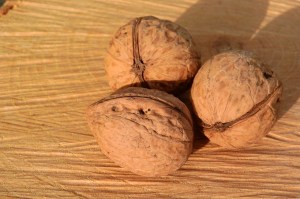
Go Love-Nuts on Valentine’s Day!

If you can’t choose between two lovers, then here’s a trick to try – but it must be done either on Saint Valentine’s Eve or at All Hallows:
“Light a fire and take three walnuts. Name one for yourself and one for each suitor.

Place the three nuts on the fire with yours in the middle of the other two.
If either nut cracks – or jumps away – that union is not meant to be.
The two nuts that blaze closest together will make the best marriage!”

(Traditional Spell)

(Photo: Public Domain)

Copyright © 2022 | KitPerriman.com | All Rights Reserved
Nature’s Vampires: 25 Things You Need To Know About Leeches

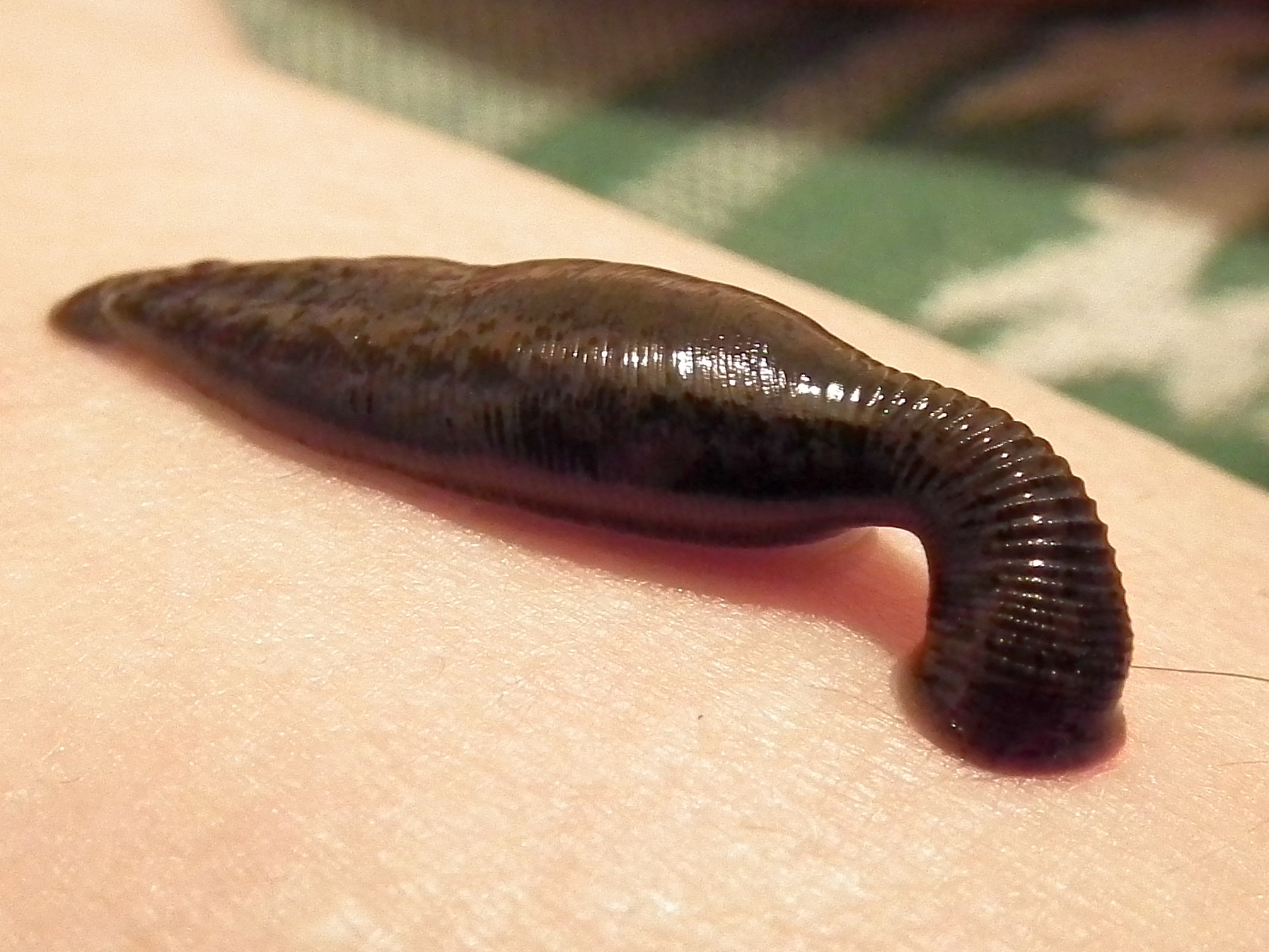
Sucking_leech

I read recently that leeches are still being used in plastic and micro surgery.  Their first reported use appears in Sanskrit writings that date back 2,500 years.  Here are 25 facts that you probably didn’t (ever want to) know:

1.  The Ancient Greeks adopted the practice of leeching to balance the four humors in Galen’s theory of the human body.

2.  The majority of leeches live in fresh water, although there are a few marine varieties too.

3.  They have suckers on each end of their bodies.

4.  Leeches are hermaphrodites.

5.  Most species have a 3-bladed jaw that slices through the skin of the host.

6.  Hirudo Medicinalis – medical leeches – have three jaws with approximately 100 sharp teeth at the rim.

7.   They store blood up to 5 times their body mass.

8.  Medical leeches only need to feed twice a year because they have a super-slow digestive system.

9.  The European variety were so popular in the 19th Century that they actually became endangered.

10. Leeches attach themselves to feed, but fall off naturally to digest the host’s blood once they are bloated.

11.They feed between 20 minutes – 2 hours.

12. The safest way to remove these parasites is by using a blunt object to break the seal of their suckers.

13. If they are shocked from the host they regurgitate their stomach contents, which often causes infection in the bite.

14. Leech saliva makes wounds bleed more readily.

15. The anticoagulant in their spit is called hirudin.

16. Leech bites generally don’t hurt because they also release an anesthetic when they penetrate the skin.

17. Wounds itch as they heal.

18. Leeches come in brown, black, and dark green colors.

19. They vary from 1″ (2.5 cm) – 12″ (30cm) in length.

20. Leeches lay eggs in cocoons.

21. In cold or dry spells they hibernate by burying themselves in the mud until conditions improve.

22.  They have poor vision, but a highly-developed response to touch and vibration.

23 Many species are nocturnal.

24. Rainforest leeches are not aquatic.   They thrive in vegetation and feed of warm-bodied hosts.

25. The use of leeches in US medical procedures was FDA approved in 2004.

In leech-rich areas these tiny vampires will drop from their hiding places and inch towards you like something from a horror movie . . .

and the thought of plastic surgery drops even further down my to-do list!

(Photo: Public Domain)

Copyright © 2022 | KitPerriman.com | All Rights Reserved
Boggarts and Bogeymen

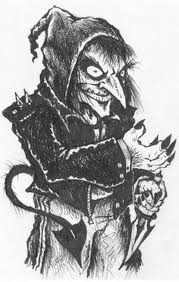
Boggart

(Picture: Public Domain)

Boggarts have terrified English country-folk for hundreds of years.  Particularly feared in Lancashire,  they were said to haunt the fields, woods, and marshes – sometimes stealing away naughty children.  The term Boggart derives from the Middle English bug meaning ghost, hobgoblin, or object of terror (OED).

According to those who have seen these spirits, Boggarts come in many shapes and sizes.  Sometimes they appear as ugly humans, while others have described them as beast-like creatures.  Everyone, however, seems to agree that they are hairy, strong, have strange eyes, and sometimes resemble devils.

Tradition says that if a Boggart is given a name it becomes destructive and unreasonable, rather than simply mischievous.  Perhaps for this reason these sprites are often referred to generically as The Bogeyman. 

While they have sometimes been held accountable for poltergeist activity inside the home, Lancashire Boggarts prefer the outdoors – they scare people with eerie noises, overturn farm items, sour milk and ale, lame animals, and leave behind weird hoof-prints.  They also get blamed when children or travelers go missing.

So how do you ward off Boggarts and Bogeymen?

Stay away from the places they roam, especially at night.  And hang a horseshoe over the front door of the house – or leave a pile of salt outside your bedroom.

Sweet dreams!

Horseshoe The Golden Horseshoe (William Michael Harnett)

 Sources:

Wikipedia: “Boggarts” accessed 3/28/2015

The New Shorter Oxford English Dictionary (Oxford: Clarendon,1993)

Copyright © 2022 | KitPerriman.com | All Rights Reserved

Brighid: Goddess and Saint

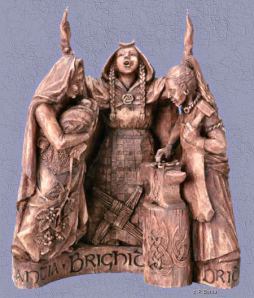
The Wise Women of Britain had their own special patron – the goddess Brighid – who later became known as Saint Brigit.  She was a Celtic pagan deity, the equivalent of Roman Minerva and Greek Athene, whose name meant exalted one.  In Irish mythology, Brighid was the daughter of Dagda, wife of Bres, and the mother of Ruadan – the son she invented keening for when he died in battle.

Brighid

Brighid was one of three sisters (all named Brighid) who jointly made up the Triple Deity – maiden, mother, crone.  For many years she was closely associated with Wise Women and became the goddess of healers and magicians.  Called on for assistance with prophecy and divination, Brighid represented wisdom, intelligence, excellence, perfection, craftsmanship, artistry, healing, and druidic knowledge.  Because she protected pregnant women and aided in childbirth, she was also connected with the hearth and home.

At some point in the Middle Ages the Catholic Church syncretized Brighid into the Christian St. Brigit of Kildare, making her the keeper of the eternal flame (from her former role of protecting Druid priestesses) and tender of holy healing wells (as she was already widely associated with medicine).  Her festival day at the start of February marks the arrival of spring, but instead of being called Imbolc it then became known as St. Brigit’s Day instead.

Brighid is the patron saint of poetry, blacksmithing, arts and crafts, cattle, and serpents.  She is credited with inventing the whistle.  Her symbols include the hearth, cauldron, forge, and bridal bed.  Corn dolls, crosses, and knots have been named after her, and she is connected with cats, foxes, cows, bees, and wrens.

Corn Doll

The last time I visited St. Mary’s Church at Newchurch-in-Pendle I was delighted by the collection of rush decorations nailed along the walls, carefully fashioned into crosses, knots, and dollies.

The old traditions die hard!

(Photos: Public Domain)


Sources:

Lockhart, Elaine. “Brighid: A Personal Relationship” in Modern Witch,  First Issue, Imbolc, 2012 (p8-9)

About Religion. “Brighid: Hearth Goddess of Ireland.” Available at http://paganwiccan.about.com/od/godsandgoddesses/p/Brighid_Profile.htm (2/25/2015)

Wikipedia:  “Brigid”

Copyright © 2022 | KitPerriman.com | All Rights Reserved