
Likewise a novel
Grown from the roots of history
Is nurtured to life.
(Kit Perriman)
(Photo: Public Domain)
Copyright © 2022 | KitPerriman.com | All Rights Reserved
Likewise a novel
Grown from the roots of history
Is nurtured to life.
(Kit Perriman)
(Photo: Public Domain)
Copyright © 2022 | KitPerriman.com | All Rights Reserved
This is such a cute song. Check out what a little witchcraft can do!
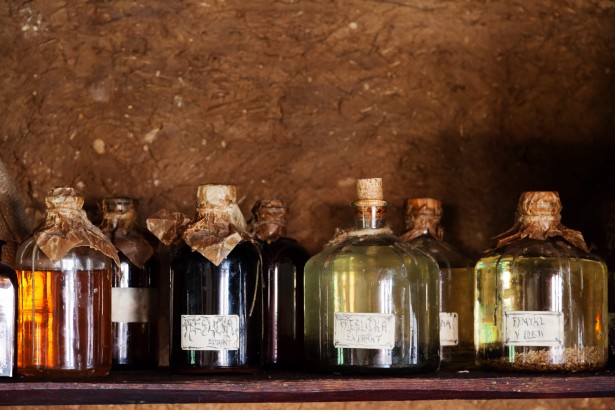
“Black Magic”
(Ed Drewett, Henrik Michelsen, Edvard Forre Erfjord,Camille Purcell)
Take a sip of my secret potion,
One taste and you’ll be mine.
It’s a spell that can’t be broken
It’ll keep you up all night.
Boy, you belong to me, belong to me,
I got the recipe.
And it’s called black magic
And it’s called black magic.
Falling in love. Hey!
Magic!
(Photo: Public Domain)
(Video: YouTube)
Copyright © 2022 | KitPerriman.com | All Rights Reserved

Like Water For Chocolate (New York: Doubleday,1992) is a strange debut novel written in the magical-realism tradition. The title comes from “an extremity of feeling” – perhaps sexual desire – where intense emotion melts the human heart, mind, or soul, just as boiling water melts chocolate.
Esquivel explores the impact of old Mexican traditions within modern culture, examining the filial responsibilities of a child to its parents, gender issues, personal sacrifice for the greater good, and the role of food as a metaphor for human feelings.
While I like the original premise that recipes contain secrets and can change with the fluctuating moods of the cook, this is not a book I would read more than once because the breaks from reality, sequencing, and characterizations sometimes make the tale a little too hard to swallow!
Copyright © 2022 | KitPerriman.com | All Rights Reserved

A return to earth
for tending and restoration
is simply another phase
on the journey of Self.
(Kit Perriman)
(Photo: Kit Perriman)
Copyright © 2022 | KitPerriman.com | All Rights Reserved

The Faust legend is a morality tale warning ambitious young men to reject the devil and all earthly temptations of power and desires of the flesh.
In German classic literature, a jaded scholar called Doctor Faust makes a pact with the devil, Mephistopheles, signed and sealed with his own blood. He agrees to exchange his soul for worldly pleasure, riches, and knowledge – but when the terms of the agreement expire he is doomed to spend the rest of eternity in hell.
Who is Faust based on? The most likely prototype seems to be Dr. Johann Georg Faust (c. 1480-1540), a famous German alchemist and magician.
Why does Faust make this pact? He is a dissatisfied academic who yearns for something more.
How long is his rule on earth? Faust is granted 24 years – one for each hour of the day.
What does the magician do with his new powers? First, he seduces a beautiful maiden called Gretchen. Yet although he destroys her earthly life, she is granted a place in Heaven because of her innocence. Then he plays pranks on people, settles old scores, and meddles in the politics of his day. At one point he demands to see the most beautiful woman ever, and is granted a visit from Helen of Troy. And finally – having sated his lusts and tamed the natural world – he has a moment of utter contentment before the devil appears and rips his body to pieces.
In choosing instant gratification and pleasure, Doctor Faust rejects Christianity and turns away from God. He is a personification of Matthew’s warning: “What good will it be for a man if he gains the whole world, yet forfeits his soul?” (16:26-27)
Would you be tempted?
(Drawing: Public Domain)
Copyright © 2022 | KitPerriman.com | All Rights Reserved
Need a refreshing dessert for hot summer days? Try a chilled fruit fool as a quick, easy treat!

Ingredients:
1lb raspberries, gooseberries, or rhubarb
4oz sugar
Water
4oz fresh elderflowers
3oz butter
3 eggs
1/3 pint of milk or single cream
4oz sugar
1 tablespoon of vanilla
Method:
1. Prepare the fruit for stewing (wash, peel, top-and-tail as needed) and place in a medium-sized pan on stove.
2. Add the sugar, elderflowers, and sufficient water to cover the fruit. Bring to the boil and stew until all the fruit is soft. For a smooth texture, strain the fruit through a sieve. For a crunchier taste, stir the mixture with a fork to soften the remaining pulp.
3. Cool in the refrigerator for at least 30 minutes.
4. Over low heat melt the butter.
5. Add all the remaining ingredients and whisk continually for 8 – 10 minutes until the mixture thickens.
6. Cool in the refrigerator for at least thirty minutes.
7. Fold the cold fruit mixture carefully into the cold custard to create a marbled effect.
8. Spoon into individual serving dishes and top with fresh fruit, mint leaves, or whipped cream.
(Photo: Public Domain)
Copyright © 2022 | KitPerriman.com | All Rights Reserved
Curses As Revenge?

“We never pray against a soul – but if we’ve aught against folk
then we ourselves take vengeance!”
(Picture: Gerard van Honhorst)
Copyright © 2022 | KitPerriman.com | All Rights Reserved

Ingredients:
12 slices white bread
Knob of butter
3 eggs
1/2 pint milk
4oz dried fruit ( currants, raisins, or sultanas)
4oz sugar
nutmeg or cinnamon
Method:
1. Heat the oven to 325 / 170/ Gas 3.
2. Grease a loaf tin with the knob of butter.
3. Cut the bread into triangles and place in the tin.
4. Sprinkle the dried fruit on top.
5. Whisk the eggs and milk together.
6. Add the sugar.
7. Pour over the bread.
8. Sprinkle with nutmeg or cinnamon.
9. Cook 40 – 50 minutes until golden brown.
10. Remove from the oven and serve immediately with custard, cream, or ice cream.
(Photo: Public Domain)
Copyright © 2022 | KitPerriman.com | All Rights Reserved
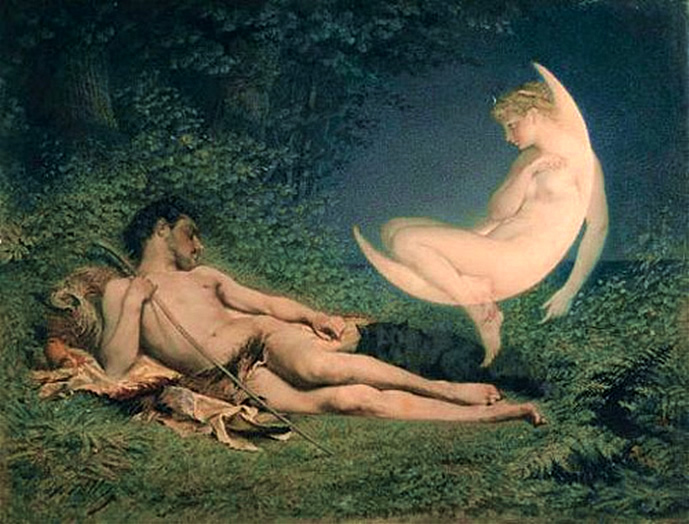
I refuse to vanish or set
when gravity tugs me to earth
in a blaze of gore or glory –
to wane to nothingness beyond
a slice of ashen promise –
And I will not slide quietly by
a masculine smothering of power –
for the damage will already be done.
Have you seen how moonlight blazes so hard
it slips beyond any brute shadow?
(Kit Perriman)
(Painting: Victor Florence Pollett)
Copyright © 2022 | KitPerriman.com | All Rights Reserved

Mary Sharratt’s Illuminations (New York: Houghton Mifflin Harcourt, 2012) tells the story of Hildegard von Bingen, the famous German Benedictine Abbess who lived from 1098-1179. Hildegard’s genuine mystical prophecies earned her the name, the Sibyl of the Rhine.
Given to the church at the tender age of 8, Hildegard was entombed in a tiny room with a radical anchorite called Jutta von Sponheim, and here she grew into a great thinker who had a strong impact on the early Catholic Church. She also became a gifted composer and artist, and was able to heal the local population with herbal medicines and gemstones. Her God was a feminine version of love.
Hildegard began experiencing visions at the age of 3, and eventually began recording them in a brilliantly illuminated manuscript. But were these images sent from God or from Satan? Fortunately she was able to convince those around her that her mysticism was a holy gift. And as she lay dying her sister nuns claimed to see two streams of light in the sky crossing over her room – a sign they interpreted as a heavenly blessing.
Illuminations is an absorbing story about a fascinating woman who bravely took on the medieval patriarchy to create a safe community for religious women. The book is well-written, filling the gaps in history with plausible suggestions that help explain why certain characters acted as they did. Although Sharratt is aware that if Hildegard had lived at a later time in Puritan England she might well have been accused of witchcraft (http://marysharratt.blogspot.com/2012/07/of-witches-and-saints-mother-demdike.html), Illuminations maintains a firm focus on the mystic’s religious calling, and does not undermine her venerable status within the church. A very good read!
Copyright © 2022 | KitPerriman.com | All Rights Reserved
 Kit Perriman