Doctor John Bayou: Voodoo Man

Voodoo 6

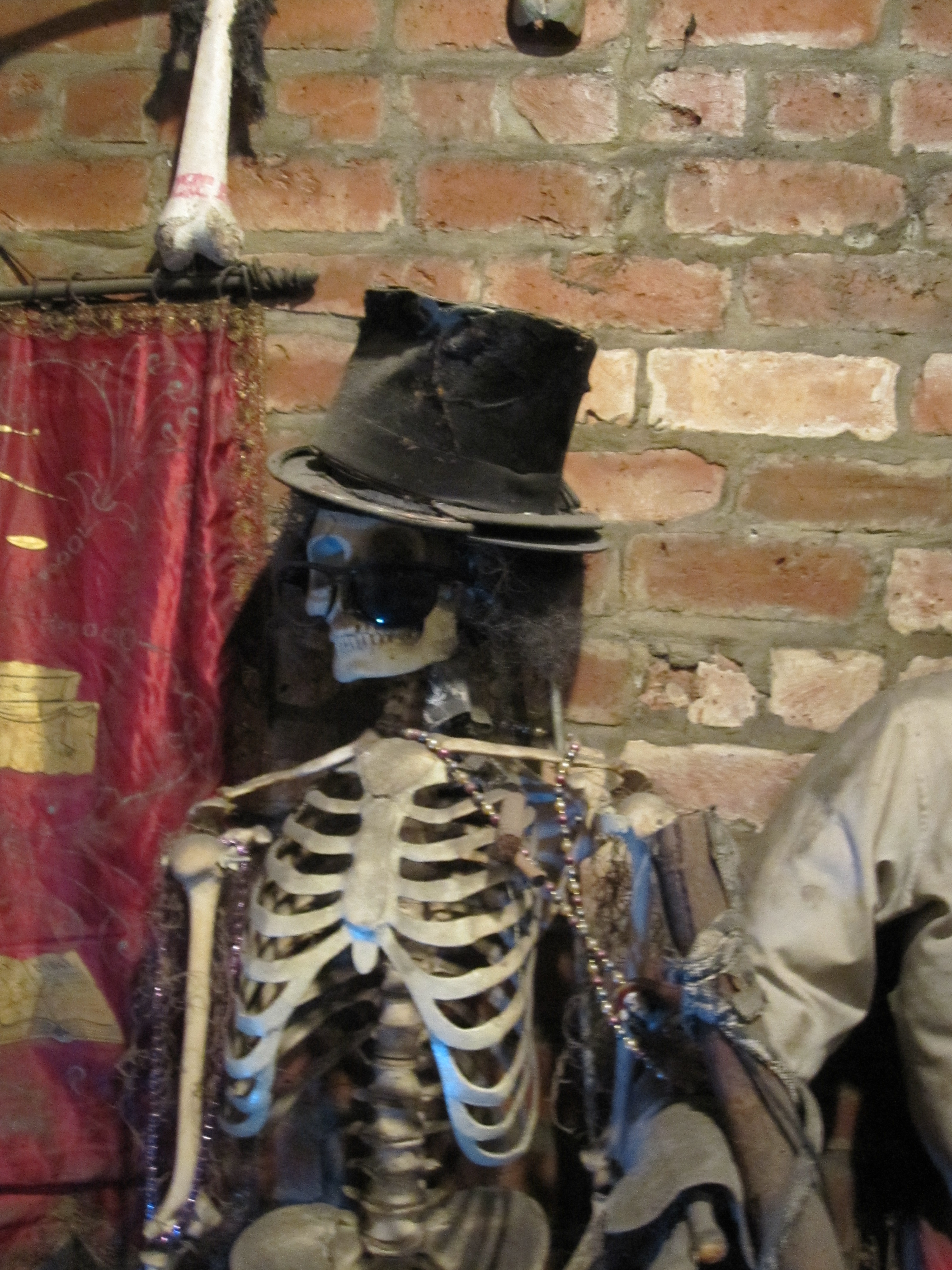
The “Last of the Voodoos” in New Orleans was the infamous tattooed Jean Montanet, commonly known as Doctor John, Voudoo John, and Bayou John.  Born a free member of the noble Bambaras Tribe from Senegal, John was kidnapped by Spanish slavers and shipped to Cuba.  After earning his freedom from a friendly master he worked as a ship’s cook, finally settling in Louisiana.

Doctor John seemed to possess mysterious Obi powers.   He began telling fortunes – and must have been skilled at reading people because he soon had enough money saved to buy a house.  Then he set up as a conjure man, and at the height of his fame was estimated to be worth $50,000.

John kept a harem of at least fifteen “wives” that he claimed to have married according to African tradition.  Most of these women were bought as slaves and they bore him many children.  At one time he teamed up with Voodoo Queen Marie Laveau to sell potions, charms, and spells.

Although Doctor John often looked after the poor in his neighborhood – and gave away food to the needy – he was tricked several times by unscrupulous business men who stole away his fortune.  He ended up broke, living with one of his daughters.

But how powerful was this Voodoo conjure man?  He seemed to have a charismatic personality and a sound understanding of herbal lore.  There are many first-hand accounts that his medicines actually worked.

However, he also liked to take advantage of the gullible white women who came to him out of curiosity.  One lady paid him $50 for a potion he later confessed was merely a few common herbs boiled in water.  His rationale was, “If folks want to give me fifty dollars, I take the fifty dollars every time!”

Sources:

“Haunted New Orleans” at http://www.nola.com/haunted/voodoo/?content/history.html

Hearn, Lafcadio.  “The Last of the Voudoos” at http://www.sacred-texts.com/afr/hearn/lastvdu.htm

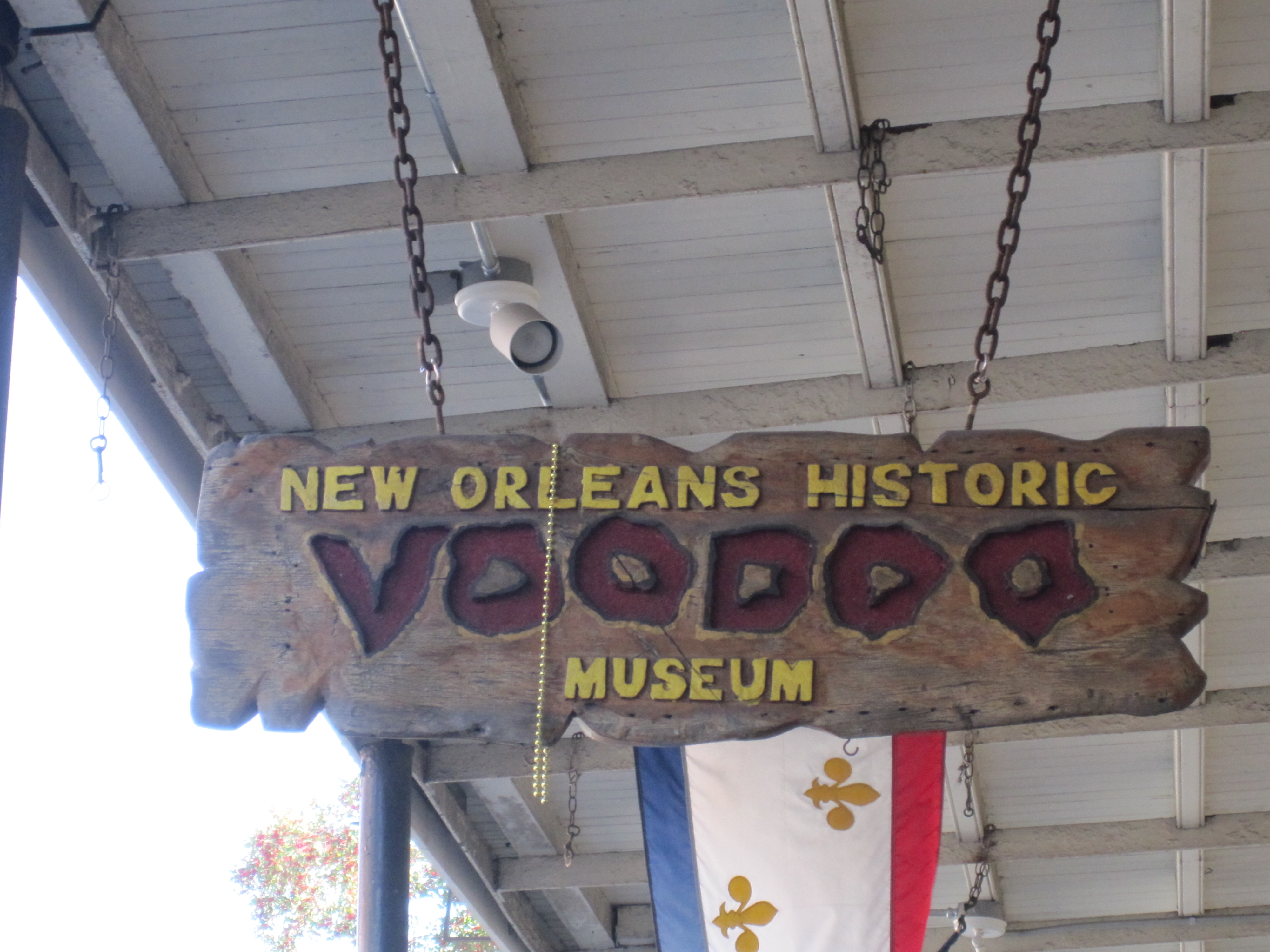
New Orleans Historic Voodoo Museum

(Photo: Kit Perriman)

Copyright © 2022 | KitPerriman.com | All Rights Reserved
Gris-Gris: A Voodoo Charm

Voodoo 12

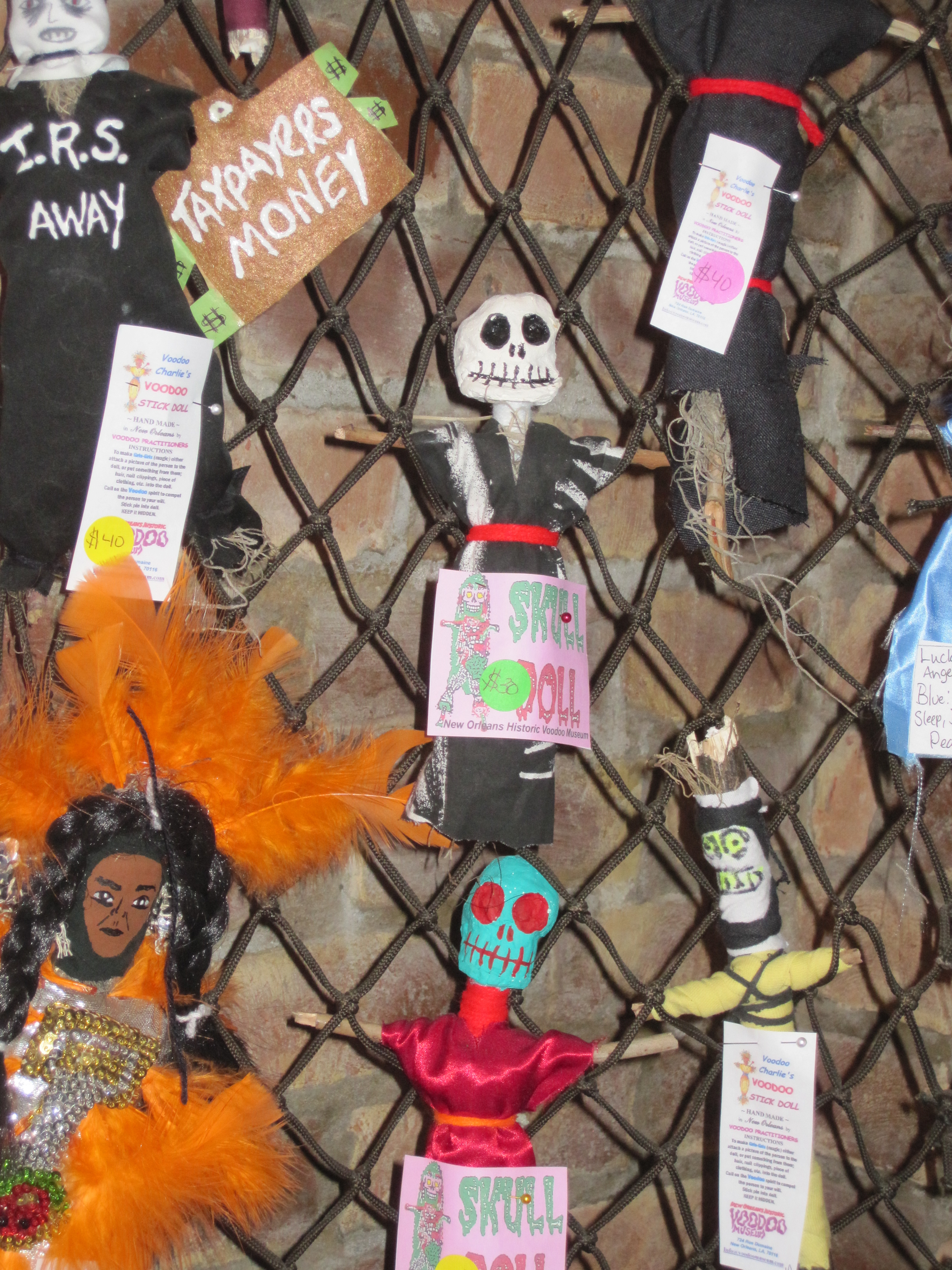
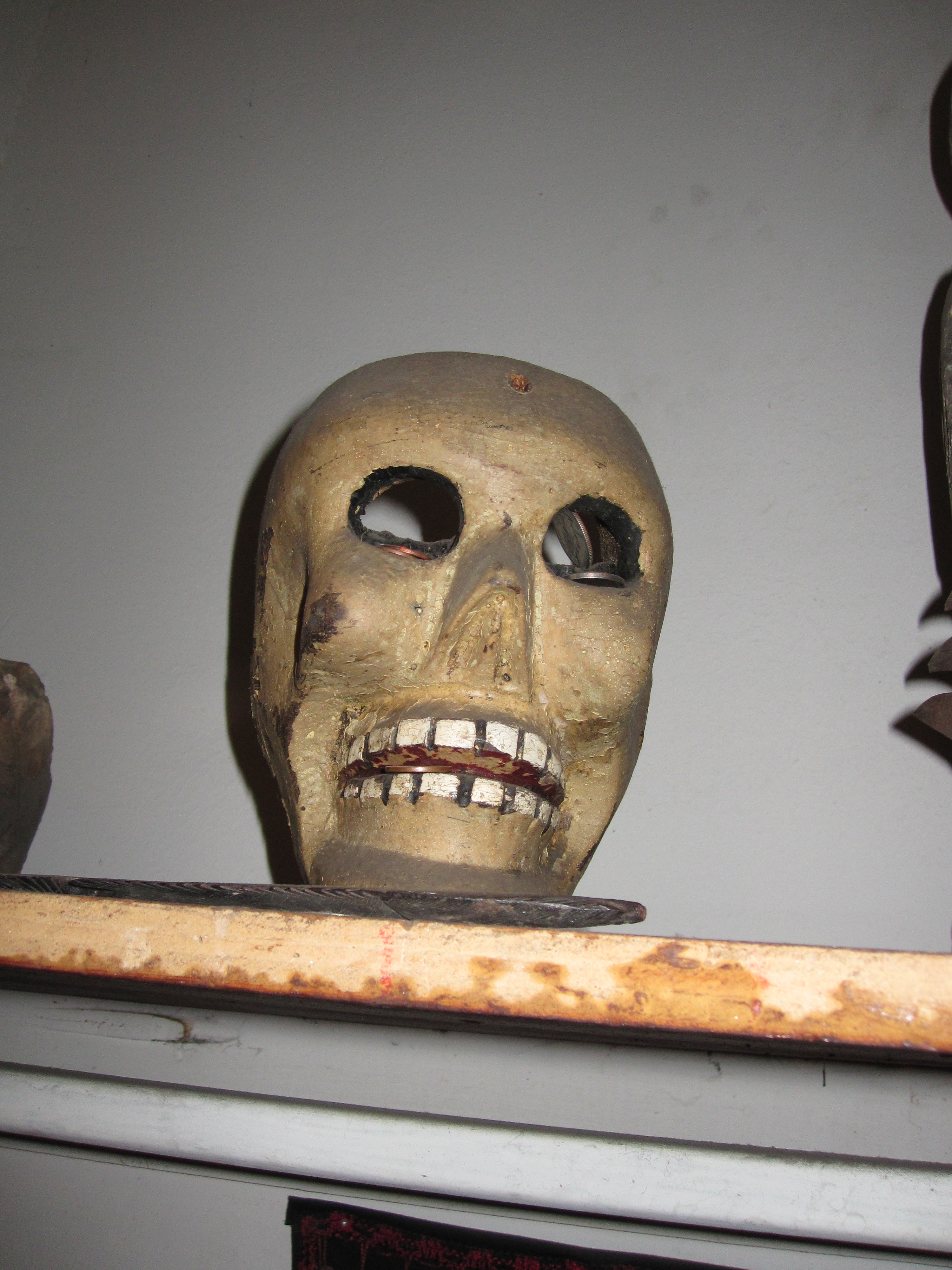
A gris-gris is a voodoo fetish that was originally designed as a doll to protect the owner from evil or bad luck.  Over time, the doll was replaced by a cloth bag that could be worn on the person.  Gris-gris today are usually small pouches inscribed with verses from the Qur’an.  They contain either 1,3,5,7,9, or 13 ritual objects such as animal bones, herbs, stones, hair, nail, or pieces of clothing.

Gris-gris are made on an altar containing the four elements: fire (candle flame), earth (salt), air (incense), and water.  These charms are used to attract money or love, to prevent malicious gossip, to protect the home, and to bring good health and fortune.

Historians believe that the gris-gris tradition originated in Muslim Ghana.  The slaves who arrived in Louisiana carried these amulets with them.  They were quickly adapted to bring ill-fortune and bad-luck curses on their white masters.  As they became part of the New Orleans voodoo culture, gris-gris were amalgamated into black magic rites to conjure up death and disaster.  In this way they changed from being a protective charm into a vengeful curse.

Some African communities still use gris-gris as a form of contraception.

The Voodoo Queen, Marie Laveau marketed a particularly nasty version she called wangas.  Made from the shroud of a person who had been dead for 9 days, they contained a witch-brew made from toad, lizard, bat, cat, owl, rooster – and a suicide’s little finger!

Sources

New Orleans Historic Voodoo Museum.

Wikipedia, “Gris-gris,” at https://en.wikipedia.org/wiki/Gris-gris_(talisman).

“Voodoo Hoodoo Spell Book,” at http://voodoohoodoospellbook.blogspot.com/p/blog-page_19.html.

(Photo: Kit Perriman)

Copyright © 2022 | KitPerriman.com | All Rights Reserved

Voodoo or Hoodoo?

Voodoo 1

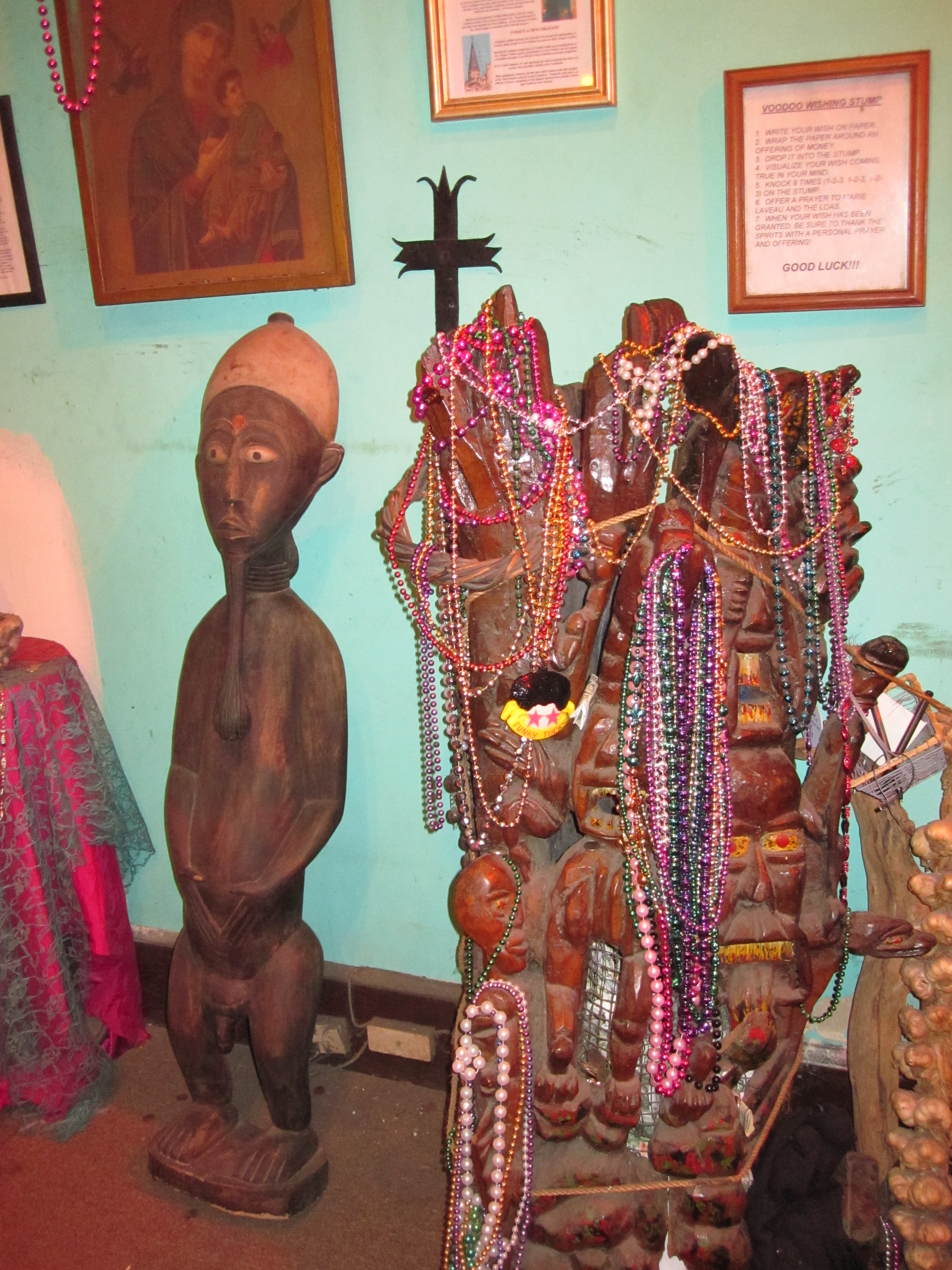
What is the difference between Voodoo and Hoodoo?  I recently visited the New Orleans Historic Voodoo Museum to find out.  Here is a brief account of my discoveries:

Voodoo is a religion (led by initiated witch doctors) that has split into two branches – Haitian Vodou and Louisiana Vodoun.

Hoodoo, however, is a form of folk magic (that anyone can practice) which originated in West Africa and thrives predominantly in the southern USA.

They are complimentary aspects of a supernatural belief system from similar ancient roots.

Voodoo 2

Voodoo comes from West African Vodun – “spirit”- and was made popular in Haiti.  It has since spread to many other places, most notably Louisiana, Puerto Rico, Cuba, The Dominican Republic, Ghana, Togo, and Nigeria.  Voodoo is a way of life  built around the supreme being Bondye, a remote creator god.  But there are many spirits called loa that can be worshipped on a personal level.  To connect with the spirit world a believer can invite the loa to enter their body and possess them during religious ceremonies.

Voodoo 3

Hoodoo is also called conjure, witchcraft, working the root, and root doctoring.  It is closely aligned with the form of African spirituality known as Ggbo.  As part of the Obeah folk tradition it spread from Haiti and Jamaica to New Orleans and along the Mississippi Delta.  In many way it is an American form of Voodoo.

Voodoo 5

Constantly changing as it comes into contact with other cultures, Hoodoo has many Roman Catholic elements.  When African American slaves were forced to convert to Christianity by a law of 1685 they replaced the loas with saints from the Bible.  God became the archetypal Hoodoo doctor who controlled fate and destiny, while Moses was the first man who performed magic and miracles.  The Bible is the greatest conjure book in the world and many of the Psalms are used in spells.

Hoodoo also draws on Spiritualism.  People are able to harness supernatural forces to assist in their daily lives and they can connect with the other world in different ways, often involving rituals and sacrifices.

Bottle Trees are a popular garden feature.  These glass bottles are used to trap evil spirits until the morning sun destroys them.

If you are ever in New Orleans then pay a visit to the Voodoo Museum.  It is a fascinating experience!

Voodoo 6

Additional Sources:

Knowledge Nuts, “The Difference Between Voodoo and Hoodoo” at http://knowledgenuts.com/2013/12/26/the-difference-between-hoodoo-and-voodoo/

Wikipedia, “Hoodoo” at https://en.wikipedia.org/wiki/Hoodoo_(folk_magic)

Wikipedia, “African Vodun” at https://en.wikipedia.org/wiki/West_African_Vodun

(Photos: Kit Perriman)

Copyright © 2022 | KitPerriman.com | All Rights Reserved
Dr. Hook’s Marie Laveau

Voodoo 8

Marie Laveau

(Shel Silverstein and Baxter Taylor)

Down in Louisiana where the black trees grow

lived a voodoo lady named Marie Laveau.

She’d got a black cat tooth and a mojo bone

and if anyone wouldn’t leave her alone

She’d go, “GREEEEEEEEEEEE another man done gone!”

She lived in a swamp in a hollow log

with a one eyed snake and a three legged dog.

She’d got a bent bony body and stringy hair

and if she ever saw you messing round there

She’d go, “GREEEEEEEEEEEE another man done gone!”

And then one night when the moon was black

into the swamp came Handsome Jack.

A no good man that you all know

and he was looking around for Marie Laveau.

He said, “Marie Laveau, you lovely witch,

why don’t you gimme a little charm gonna make me rich?”

He said, “Now gimme million dollars and I’ll tell you what I’ll do,

this very night I’m gonna marry you!”

It’ll be GREEEEEEEEEEEE another man done gone.

So Marie did some magic and she shook a little sand,

she made a million dollars and she put it in his hand.

Then she giggled and she wiggled and she said, “Hey, hey,

I’m getting ready for my wedding day.”

But old Handsome Jack, he said “Good-bye Marie,

you too damn ugly for a rich man like me.”

So Marie started crying, her fangs started shaking,

her body started turning, she started quaking.

She said, “GREEEEEEEEEEEE – another man done gone!”

So if you ever get down where the black trees grow

and meet a voodoo lady named Marie Laveau,

And if she ever asks you to make her your wife,

man, you’d better stay with her for the rest of your life

Or it’ll be GREEEEEEEEEEEE….

Check out the version below:

(Video: YouTube)

(Photo: Kit Perriman)

Copyright © 2022 | KitPerriman.com | All Rights Reserved
Marie Laveau: Voodoo Queen

Marie Laveau (1794-1881) was  a Louisiana Creole free person of color who developed a reputation as The Voodoo Queen of New Orleans.

Marie_Laveau[1] Laveau was born in the French Quarter, the illegitimate child of a wealthy plantation owner.  She worked as a liquor importer, hairdresser, occultist, herbal healer, and also ran a brothel.   Much of her power was said to have come from her carefully-cultivated network of spies who gave her the information she used to impress her patrons.  One rumor claims that Laveau originated from a long line of voodoo priestesses in West Africa.  Cynics, however, suggest she learned her skills from fellow practitioner, Doctor John Bayou.

At the age of 18 Laveau married Jacques Paris.  He died in mysterious circumstances leaving her with two young children.  Later, she took a younger man as a common-law husband and bore him fifteen children.  Only one – a daughter also called Marie – reached adulthood.  Marie continued her mother’s legacy when she retired from the public in old age.

Laveau supposedly had a snake called Zombi, named after an African God.  She staged elaborate ceremonies where the dancers became possessed by voodoo spirits called loas; danced naked around bonfires; sold charms or gris-gris; saved several men from the gallows; told fortunes; and stayed eternally youthful.  She passed peacefully in her sleep, but her ghost has often been seen in the graveyard where she is buried.

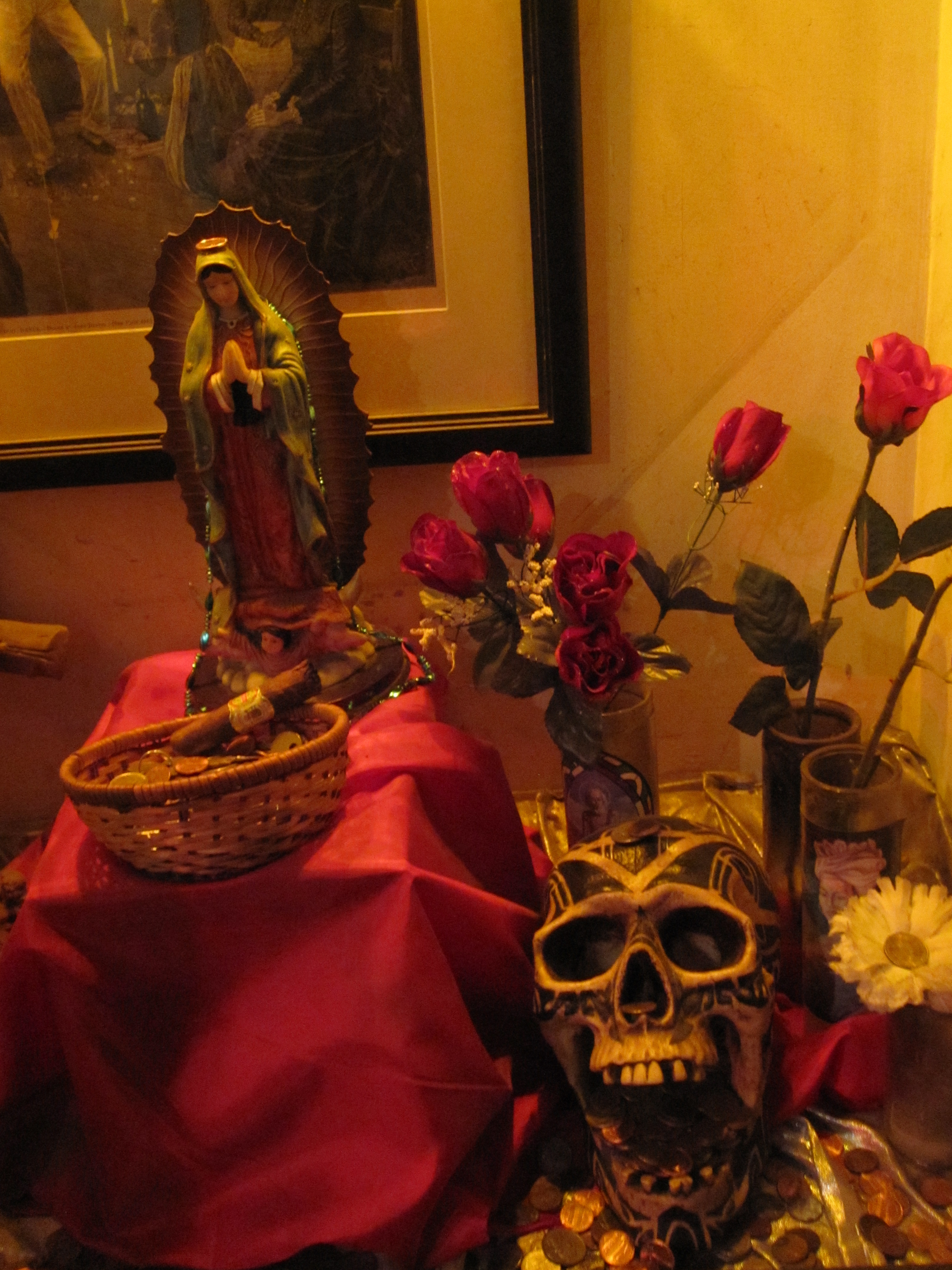
Laveau’s tomb is in St. Louis Cemetery, Number One.  According to legend, if you draw an X on the tomb, turn around three times, knock on the tomb and shout your wish – it will be granted.  Once this is done you must return to the tomb, circle the X you made, and leave an offering of thanks.

If anyone has tried this – please let me know if it worked!

Sources:

CSI, “Secrets of the Voodoo Tomb” at http://www.csicop.org/sb/show/secrets_of_the_voodoo_tomb/

The Mystica, “Laveau, Marie” at http://www.themystica.com/mystica/articles/l/laveau_marie.html

Voodoo On the Bayou, “Marie Laveau” at http://www.voodooonthebayou.net/marie_laveau.html

Wikipedia, “Marie Laveau” at https://en.wikipedia.org/wiki/Marie_Laveau

(Photo: Angela Bassett playing the role of Marie Laveau in American Horror Story – Public Domain)

Copyright © 2022 | KitPerriman.com | All Rights Reserved
Feral

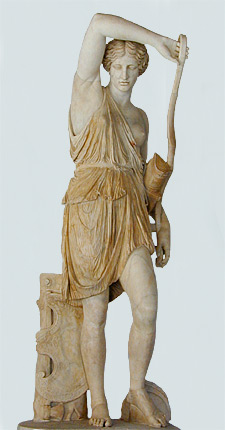
A wild woman born

has many flagons of magic

(and still other dungeons

remain in cobweb clasps)

Warrior

She can drop her spells as stepping stones to glamor

turning each lock behind

in the black labyrinth.

(Kit Perriman)

(Photo: Public Domain)

Copyright © 2022 | KitPerriman.com | All Rights Reserved
Imagine Dragons – Demons

Imagine Dragons – Demons

(Alexander Junior Grant, Benjamin Arthur Mckee, Daniel Coulter Reynolds, Daniel Wayne Sermon, and Joshua Francis Mosser)

When the days are cold
And the cards all fold
And the saints we see
Are all made of gold
When your dreams all fail
And the ones we hail
Are the worst of all
And the blood’s run stale

I wanna hide the truth
I wanna shelter you
But with the beast inside
There’s nowhere we can hide
No matter what we breed
We still are made of greed
This is my kingdom come

When you feel my heat
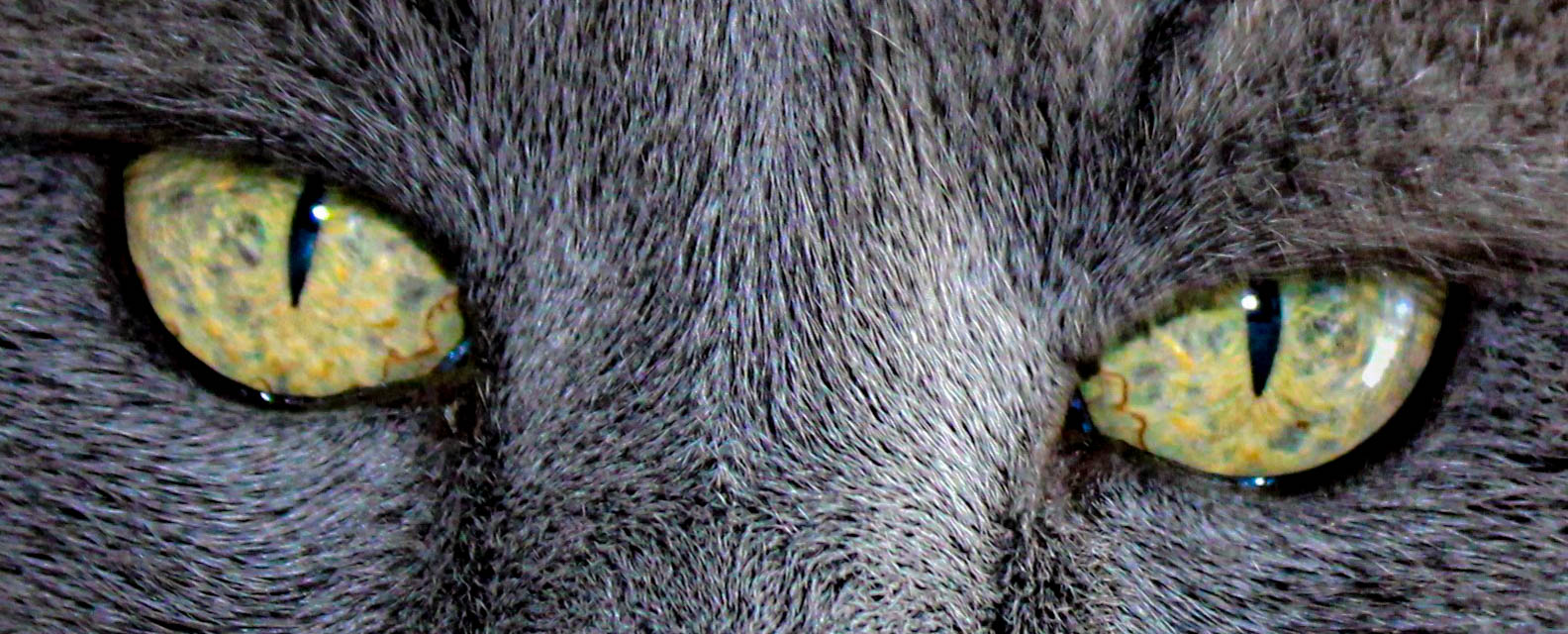
Look into my eyes
It’s where my demons hide
Don’t get too close
It’s dark inside
It’s where my demons hide

At the curtain’s call
It’s the last of all
When the lights fade out
All the sinners crawl
So they dug your grave
And the masquerade
Will come calling out
At the mess you’ve made

Don’t wanna let you down
But I am hell-bound
Though this is all for you
Don’t wanna hide the truth
No matter what we breed
We still are made of greed
This is my kingdom come

When you feel my heat
Look into my eyes
It’s where my demons hide
Don’t get too close
It’s dark inside
It’s where my demons hide

They say it’s what you make
I say it’s up to fate
It’s woven in my soul
I need to let you go
Your eyes, they shine so bright
I wanna save that light
I can’t escape this now
Unless you show me how

When you feel my heat
Look into my eyes
It’s where my demons hide
Don’t get too close
It’s dark inside
It’s where my demons hide

Watch this awesome live version at:

(Photo: Kit Perriman)

(Video: YouTube)

Copyright © 2022 | KitPerriman.com | All Rights Reserved
What’s Your Poison? Foxglove!

Did you know:

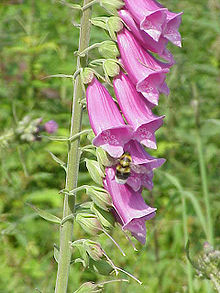
  • The Foxglove plant has been called Bloody Fingers, Dead Men’s Bells, Witches’ Gloves, and Fairy Glove because of its toxicity.
  • It is part of the Digitalis family.
  • Its attractive flowers have tubular bell-like petals that hang from a long stem.   They blossom in a variety of colors – most often purple, pink, red, white, and yellow – and many have speckled throats.

Foxglove

  • Foxgloves like acidic soil, and because different varieties favor sun or shade they thrive in a range of places from woodlands, moorlands, hedgerows, mountain slopes, and sea cliffs.
  • Since the Eighteenth Century a medicine extracted from the Foxglove plant has been used to treat irregular heart conditions.  A modern derivative called Digoxin is still used by cardiologists today.
  • The entire species is poisonous.  They cause nausea, vomiting, diarrhea, jaundice, altered vision, abnormal heart rates, weakness, seizures, and death.
  • All parts of the plant are toxic to humans, a range of other mammals, and poultry.  Drying does not affect the potency.  Symptoms last 1-3 days but recovery is likely with medical intervention.
  • Vincent Van Gogh’s “Yellow Period” may have resulted from taking a Foxglove medication that was given to control seizures!

Sources:

Botanical.com. “Foxglove,” at http://botanical.com/botanical/mgmh/f/foxglo30.html

MedicinePlus. “Foxglove Poisoning,” at https://www.nlm.nih.gov/medlineplus/ency/article/002878.htm

Wikipedia. “Digitalis,” at https://en.wikipedia.org/wiki/Digitalis

(Photo: Public Domain)

Copyright © 2022 | KitPerriman.com | All Rights Reserved

What’s Your Poison? Opium!

poppy

Did you know:

  • Papaver somnifera – the Opium Poppy – has been cultivated in Eurasia for over 6,000 years.
  • There is some evidence that poppies were important in pre-historic religious rites.
  • The word opium comes from the Greek word opos, meaning juice.  It was associated with the love goddess Aphrodite, and the god of sleep, Hypnos.
  • The flowers can be red, white, orange, yellow, and deep pink.
  • Not all poppies contain the narcotic opium, but they are all poisonous.  For this reason they were traditionally mixed with hemlock for a quick and painless death.
  • For many years opium was used as a murder weapon by unscrupulous members of the medical profession.
  • Poisoning occurs from eating unripe poppy seed capsules, or from overdose after it has been processed into opium, codeine, heroine, and morphine.
  • Poppies were grown for a wide range of medicinal benefits: sedatives, pain reduction, and mood elevation.  The Greeks and Romans used them to treat diarrhea, dysentery, asthma, stomach complaints, and poor eyesight.
  • Overdose triggers erratic behavior, loss of appetite, stupor, coma, and may result in death from respiratory failure.
  • Poppies are also toxic for dogs and cats.
  • John McCrae’s poem In Flanders Fields inspired the adoption of the poppy as the national Remembrance Day symbol to honor British war veterans.

OLYMPUS DIGITAL CAMERA

John McCrae, “In Flanders Fields”

Sources:

Poison Diaries. “Opium Poppy: A poisonous plant,” at http://thepoisondiaries.tumblr.com/post/18186895021/opium-poppy-a-poisonous-plant

Poison Plant Patch. “Poppy,” at http://www.novascotia.ca/museum/poison/?section=species&id=102

Right Diagnosis From Healthgrades. “Common Poppy Poisoning,” at http://www.rightdiagnosis.com/c/common_poppy_poisoning/intro.htm

Wikipedia. “Opium” at https://en.wikipedia.org/wiki/Opium

(Photos: Public Domain)

Copyright © 2022 | KitPerriman.com | All Rights Reserved

What’s Your Poison? Oleander!

Did you know:

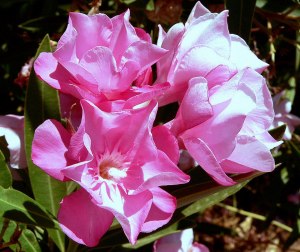
  • Nerium Oleander is a highly-toxic shrub that grows between 6-20 feet tall.
  • It is drought-tolerant and can survive in poor soil.
  • Oleander thrives naturally around dry stream beds but it is often reared in ornamental gardens because it is a showy and fragrant bush.
  • Mature stems have a gray bark, while the dark green leaves are thick and leathery.
  • The downy seeds grow in long narrow capsules.
  • Oleander flowers come in a wide variety of shades including white, purple, yellow, apricot, pink, and red.  They generally have a sweet scent.
  • All parts of the plant are toxic, even when dried out.  It should not be used for firewood or cooking.
  • The sap causes irritations of the eyes and skin.
  • Rodents and birds are not affected by the toxins but it is highly dangerous to humans.  There are, however, few reported deaths from Oleander poisoning, even when it is intentionally ingested in suicide attempts.
  • Effects of the poison last 1-3 days if treated in a hospital.
  • Ingestion of the toxin affects the stomach, heart, and central nervous system causing blurred vision, nausea, vomiting, excess salivation, pain, diarrhea, and irregular heartbeats.  The skin becomes pale and cold.  There can be drowsiness, tremors, seizures, coma, and eventual death.
  • Because Oleander was the first plant to bloom in Hiroshima after the atomic bombing of 1945, it  was adopted as the city’s official flower.

Sources:

Home Guides. “How Toxic Is Oleander To Humans?” at http://homeguides.sfgate.com/toxic-oleander-humans-82304.html

Medline Plus.  “Oleander Poisoning,” at https://www.nlm.nih.gov/medlineplus/ency/article/002884.htm

Wikipedia. “Nerium” at https://en.wikipedia.org/wiki/N

(Photo: Public Domain)

Copyright © 2022 | KitPerriman.com | All Rights Reserved