The Craft

The traditions of the Goddess are handed down from mother to daughter.
(Drawing: Public Domain)
Copyright © 2022 | KitPerriman.com | All Rights Reserved
The Craft
The traditions of the Goddess are handed down from mother to daughter.
(Drawing: Public Domain)
Copyright © 2022 | KitPerriman.com | All Rights Reserved
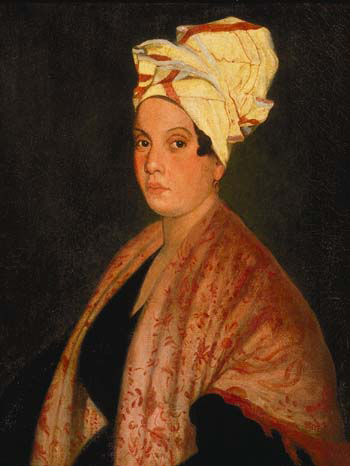
Marie, Marie, da voodoo veau, she’ll put a spell on you,
Marie, Marie, da voodoo veau, she’ll put a spell on you,
Marie, Marie, da voodoo veau,
She’s the witch queen of New Orleans, of New Orleans.
I’m gonna tell you a story, strange as it now seems
Of zombie, voodoo, gris gris, and the Witch Queen of New Orleans.
She lived in a world of magic, possessed by the devil’s crew
From a shack near the swamplands, made of mud-pile brick,
Marie stirred her witches brew.
Marie, Marie, da voodoo veau, she’ll put a spell on you,
Marie, Marie, da voodoo veau, she’ll put a spell on you,
Marie, Marie, da voodoo veau,
She’s the Witch Queen of New Orleans, of New Orleans.
For a dime or a nickel, anyone could buy voodoo of any kind.
She had potions and lotions, herbs, and tanna leaves
Guaranteed to blow your mind.
Early one morning into mucky swamp dew, vanished Marie with hate in her eyes
Though she’ll never return, all the Cajuns knew, a Witch Queen never dies.
Marie, Marie, da voodoo veau, she’ll put a spell on you,
Marie, Marie, da voodoo veau, she’ll put a spell on you,
Marie, Marie, da voodoo ve veau,
She’s the witch queen of New Orleans, of New Orleans.
Marie, Marie, da voodoo veau, she’ll put a spell on you,
Marie, Marie, da voodoo veau, she’ll put a spell on . . . .
(Picture: Frank Schneider)
(Video: YouTube)
Copyright © 2022 | KitPerriman.com | All Rights Reserved

This is the womb of the world
where two seas collide
at a hammock of land
and bony rocks arch
in the jet blood-black spray. Three
mythical crone stones –
who see what sharp lips never
tell – still watch through
their ageless snake hair for the
goings of they that
once crawled from their legs in the
primeval salt-dawn of time.
(Kit Perriman)
(Photo: Kit Perriman)
Copyright © 2022 | KitPerriman.com | All Rights Reserved
Custard was used to accompany pies and puddings in the days before ice cream! It is still very popular today, and can be served hot or cold with a variety of delectable dishes.
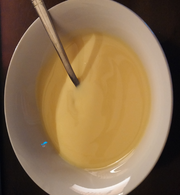
Ingredients:
3oz butter
3 eggs
1/3 pint of milk or single cream
4oz sugar
1 tablespoon of vanilla
Method:
1. Over a low heat melt the butter.
2. Add all the remaining ingredients and whisk continually for 8 – 10 minutes until the mixture thickens.
3. Cool slightly and place in a jug. Serve warm.
4. For cold custard place in a covered bowl in the refrigerator until set.
(Photo: Kit Perriman)
Copyright © 2022 | KitPerriman.com | All Rights Reserved

The Dovekeepers (New York: Simon & Schuster, 2011) tells the tragic story of the Siege at Masada in 70 CE, when 900 Jews were trapped on a mountain in the Judean desert surrounded by an army of hostile Roman soldiers. After many months of resistance the rebels chose to commit mass suicide rather than surrender into slavery. Only 2 women and 5 children survived. They gave their testimony to a scholar named Flavius Josephus. Alice Hoffman then turned their extant accounts into this epic historical fiction.
The Dovekeepers follows the lives of four women: Yael, the daughter of an assassin; Revka, a baker’s wife who lost her daughter in a brutal Roman attack; Aziza, who was raised as a male warrior; and Shirah, “The Witch of Moab.” These four women arrive at Masada on very different paths, yet they all become dove keepers at the fortress. Shirah and Yael survive the final massacre.
Hoffman’s lengthy book is vivid and powerful, with a dramatic mix of magic and Judaism that some readers may find offensive. And some of the supernatural elements, like the cloak of invisibility, stretch the bounds of belief. Nevertheless, the book resonates with the strength of the human spirit in the face of adversity, and is a wonderful reminder of courage, sacrifice, and fortitude.
I found Shirah the most compelling character. She is an Alexandrian wise woman with uncanny insight, gifted in magic and medicine. Shirah was trained by an Egyptian priestess and passes on some of her skills to Yael. Her bravery helps the few survivors to escape through their underground cave system – the final proof of her resilience, adaptability, and cunning powers.
The Dovekeepers is a great Book Club selection, generating a lot of insightful discussion. But its length and density makes it more demanding than some other popular choices.
Copyright © 2022 | KitPerriman.com | All Rights Reserved
(Ashley Serena)

Hush, my rose still
And look at the moon tonight.
Do you see the shadows there?
This world is full of twisty frights,
And spooks who love to scare.
Feel how the wind blows through your bones!
See the treetops shake and shiver!
Just like the wind
We take to flight and make the grown men quiver.
There is magic inside of you.
Hush, my rose still
And watch as they fly away
With the moonlight on their wings.
You’ll join their merry haunt someday –
Hear how they howl and sing.
There is magic inside of you.
Light on your feet, past windows you creep,
Follow the cat as black as ink
One step ahead while they’re tucked in bed.
I’ll find secrets dark and secrets deep!
There is magic inside of you.
Hush . . .
Here is Ashley’s You-Tube video:
(Photo: Kit Perriman)
(Video: You Tube)
Copyright © 2022 | KitPerriman.com | All Rights Reserved
 Isabel Allende’s The House of the Spirits is my first encounter with Latin American magical realism (New York: Random, 2005). This epic saga follows three generations of a Chilean family – headed by the determined patriarch Esteban Truebas – as they experience joy, tragedy, struggle, rebellion, and political turmoil, in a world where the supernatural mingles alongside reality.
The House of the Spirits contains magic, ghosts, poison, and demonic possession, and it functions as an allegory of the South American world where Allende grew up. It is a novel designed to “reclaim the past” and “overcome the terrors” of Chilean history (433).
Allende successfully employs symbolism, mysticism, and nationalism in a vivid drama of political turmoil and feminist rebellion. And while the novel itself does not rank as great literature, it is an excellent example of lush storytelling and descriptive writing – a tale that resonates with the poetic musicality of the Latino language.
I would recommend The House of the Spirits to those readers seeking a unique, well-crafted, multi-cultural experience.
Copyright © 2022 | KitPerriman.com | All Rights Reserved

And suddenly – with a rip of flesh –
the veil gapes full wide,
excitement blankets horror – sees
the onyx gleam inside,
a blanched bone cheek is turned to toward
gained opportunity.
Does crossing this threshold
lead to spirituality?
(Photo: Kit Perriman)
Copyright © 2022 | KitPerriman.com | All Rights Reserved
The staple meal for most medieval folk was pottage – a stew made from whatever was available at the time. Everything was cooked together in one large cauldron over the fire. Pottage usually contained a mixture of meat, vegetables, herbs, pulses, and grains. Here is a tasty modern version for you to try!
 (Picture: Gerard Hoet)
Ingredients:
1lb fully cooked meat or poultry
Good pinch of salt and pepper
2 potatoes
2 onions
2 carrots
2 sticks celery
1 leak
2 root vegetables (turnip, parsley, or swede)
2 tablespoons olive oil
1 pint chicken or beef stock
1 tablespoon parsley or thyme
1/2 pint red wine
2 tablespoons Worcester Sauce
2oz pearl barley
Method:
1. Chop all the meat and vegetables into large chunks.
2. Boil the olive oil in a pot until bubbling, then lower to a medium heat.
3. Add the onions, potatoes, carrots and root vegetables. Brown until slightly softened.
4. Add the celery and leak. Brown until slightly softened.
5. Stir in the cooked, chopped meat. Add salt and pepper to taste. Mix well.
6. Pour in the beef stock. Bring to the boil stirring well. Simmer for 20 minutes, or until the vegetables are soft.
7. Add the red wine and Worcester Sauce. Simmer for an additional 20 minutes. The mixture will reduce.
8. Stir in the pearl barley and add parsley or thyme to taste.
9. Cover and simmer for 30-40 minutes until the barley softens and the pottage thickens.
Serve with rice or fresh crusty bread!
Copyright © 2022 | KitPerriman.com | All Rights Reserved
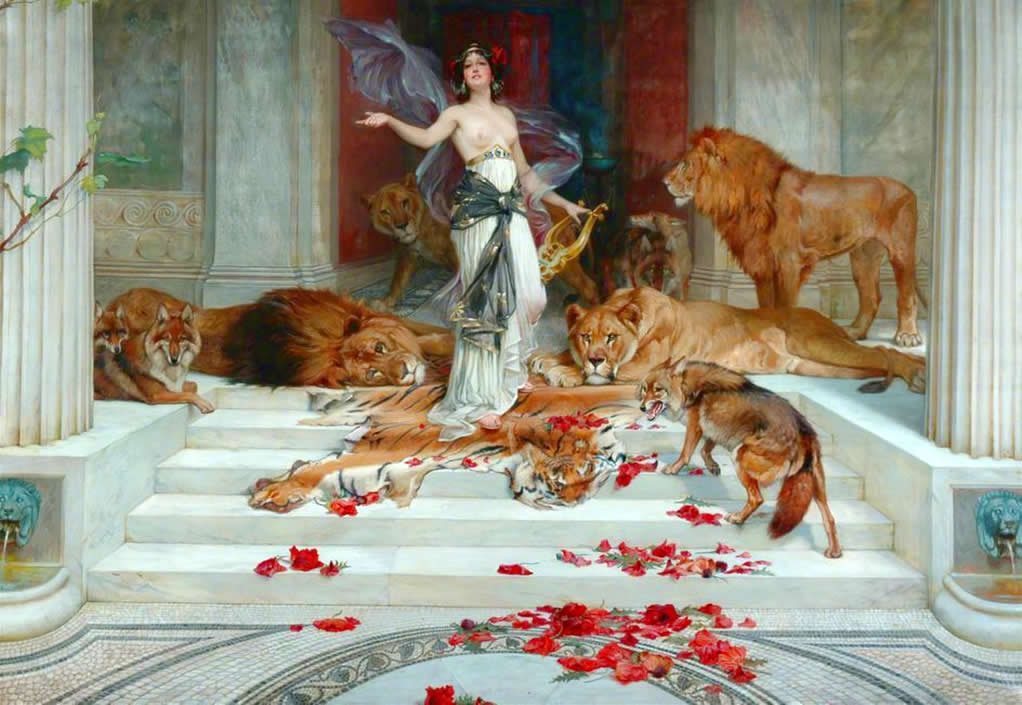
Circe – one of the foremost witch goddesses from the European literary tradition – was immortalized in Homer’s Odyssey. Offspring of the sun-god Helios and a sea nymph called Perse, Circe lived on the island of Aeaea. Some sources, however, claimed she was the daughter of the dark goddess Hecate because of her association with the moon.
The fair-haired Circe was skilled in the arts of transformation and illusion. She was also the mistress of glamor magic with a vast knowledge of potions and herbs. In Homer’s tale she transformed Odysseus’ men into pigs with human intelligence. Eurylochus escaped the enchantment and managed to warn Odysseus, who had remained behind to guard their boat. On the way back to rescue his crew the hero was met by Hermes and given a magic plant called moly to protect him from the witch. Odysseus overpowered Circe, demanded that his men be restored to their human forms, but then he stayed on the island with her for another year. During this time he fathered a son called Telegonus, the boy who eventually killed him with a poisoned spear. Later, Circe was slain by Telemachus – Odysseus’ legitimate son with Penelope.
Botanists suggest that enchanter’s nightshade could have been one of Circe’s magic plants because it contains an anticholinergic that produces hallucinations, and may make men believe they have been transformed into animals. Also, moly might derive from the snowdrop, as this flower contains the anti-hallucinogenic compound called galantamine.
Circe appears to have functioned as a symbol of luxury and wantonness, perhaps as a warning against the drunkenness, lust, and debauchery that made men act like pigs. But unlike other mythological hags who rendered men impotent, she was a beautiful, alluring witch figure who catered to their sexual fantasies instead. Small wonder her fame lives on!
Sources:
Graves, Robert. New Larousse Encyclopedia of Mythology. Worldwide: Hamlyn, 1977.
Oxford Classical Dictionary (Third Edition). Oxford: Oxford University Press, 1996.
Wikipedia: “Circe” http://en.wikipedia.org/wiki/Circe
(Painting: Wright Barker)
Copyright © 2022 | KitPerriman.com | All Rights Reserved
 Kit Perriman