Feel the power . . .

(Photo: Mansourelman Elmans)
Copyright © 2022 | KitPerriman.com | All Rights Reserved
Feel the power . . .
(Photo: Mansourelman Elmans)
Copyright © 2022 | KitPerriman.com | All Rights Reserved
That Old Black Magic
(Johnny Mercer, Dub Allbritten, Harold Arlen, and Ronnie Self)

That old black magic has me in its spell,
That old black magic that you weave so well,
Those icy fingers up and down my spine,
The same old witchcraft when your eyes meet mine.
The same old tingle that I feel inside
And then that elevator starts its ride,
And down and down I go, round and round I go,
Like a leaf that’s caught in the tide.
I should stay away, but what can I do?
I hear your name and I’m aflame,
Aflame with such a burning desire
That only your kiss can put out the fire.
Because you are the lover I have waited for,
The mate that fate had me created for,
And every time your lips meet mine,
Darling, down and down I go, round and round I go,
In a spin, loving the spin that I’m in,
Under that old black magic called love.
Ella Fitzgerald version:
Frank Sinatra version:
Who sings it best?
(Photo: Public Domain)
Copyright © 2022 | KitPerriman.com | All Rights Reserved
Olde English Treacle Toffee
This chewy toffee is a great Halloween and Bonfire Night favorite! Try it for Thanksgiving . . .

Ingredients
4oz butter
Knob of butter for greasing pan
8oz brown sugar
1/4 teaspoon cream of tartar
4oz dark treacle
4oz golden syrup
glass of cold water
Method
(Photo: Public Domain)
Copyright © 2022 | KitPerriman.com | All Rights Reserved

Cecelia Holland’s The King’s Witch (New York: Berkley, 2011) is a historical novel set during the Third Crusade to take Jerusalem, around 1191. Edythe – a young Jewish woman pretending to be Christian – is dispatched by Queen Eleanor of Aquitaine to inform on her children, Richard the Lionheart and his sister Johanna. Edythe has inherited a little folk-healing skill from her physician father, and using her knowledge of herbs and potions she manages to save the king’s life when he contracts a dangerous fever, a feat than earns her the nickname of witch. Fortunately, this is the era before the Burning Times swept across Europe.
King Richard embarks on his holy campaign to atone for the homosexuality he believes makes him a monster in the eyes of God. On the same journey, Edythe begins her own religious pilgrimage to discover and reclaim her Jewish heritage. She develops a bond with another outsider, the king’s bastard relative called Rouquin, who tells her that Richard’s crusade “isn’t about God” but rather “about power.” This ironically proves true at the end – with the suggestion that the strongest power on earth is love.
Although a lot of political background informs the start of the novel, Holland’s crisp style cuts cleanly through to the center of this original, inventive tale. It is well-researched and nicely executed, especially the early medicinal knowledge which includes a particularly harrowing head-trauma surgery. The King’s Witch can be classified as both a romance and a fiction. And while the relationship between Edythe and Rouquin is not entirely convincing, the action scenes and excellent details prove sufficient to make this a satisfying historical novel.
Copyright © 2022 | KitPerriman.com | All Rights Reserved
In the beginning, the pentagram (pentagon) was a holy symbol for The Divine. How did it come to represent evil? And why is it now the most popular image of modern Wiccans and witchcraft?

The pentagram is a five-pointed star within a circle. Originally, the single peak was on top and pointed towards God. It was first recorded around 3500 BC. The Ancient Mesopotamians used it represent their power extending into the four corners of the world.
The Hebrews chose the pentagram to signify Truth, and Pythagoras’ followers considered it to be the emblem of Perfection. Celtic Druids also associated it with the Godhead, because five was their sacred number.
The Early Christians connected the pentagram with the Five Wounds of Christ, but eventually decided to use the symbol of the Cross as their banner instead. Yet the religious connection to the “Endless Knot” of the star endured, and it soon became a personal talisman to ward off demons. In Medieval times it was used as an amulet over windows and doors to stop evil from entering the home.
According to Arthurian legend, Sir Gawain adopted the pentagram for the coat-of-arms on his shield, claiming the five points represented Generosity, Courtesy, Chastity, Chivalry, and Piety.
It was also used by the Knights Templar, who believed the pentagram contained certain mystical powers. Later, when they were persecuted by King Louis IX’s Inquisition, this symbol became associated with heresy.
Before long, the five-pointed star was linked with the Horned God, Pan. It was renamed the “Witch’s Foot” and entered in the mythology of witches and pagans. No longer did the pentagram represent the Divine. For many years it was the public symbol of Satan and his devils.
In private, however, the power of the pentagram lived on. Western Occultists and Freemasons believed that mankind was a smaller part of a greater universe and they decided that this symbol – the “Star of the Microcosm” – was the best representation of human insignificance.
During the Nineteenth Century certain Metaphysical Societies – particularly those based on the ancient Holy Kabbalah – established the pentagram as part of the Tarot Card system of divination. They renamed the Suit of Coins as the Suit of Pentacles.
Twentieth Century Satanists adopted inverted pentagrams (and inverted crucifixes) as symbols of evil – an unfortunate association that has stuck in public consciousness.
Meanwhile, the upright pentagram has been reclaimed by Wiccans and Witches. They see it as a representation of the five elements – Earth, Fire, Wind, Air, and Spirit. It remains the most recognized symbol of their beliefs, and has once again become associated with the Divine!
Sources:
Cyber Witchcraft. “Witchcraft Symbols,” at http://www.cyberwitchcraft.com/witchcraft-symbols.html
Pagan’s Path. “History of the Pentagram”: at http://www.paganspath.com/magik/pentacle1.htm
Wikipedia. “Pentagram,” at https://en.wikipedia.org/wiki/Pentagram
(Picture: Public Domain)
Copyright © 2022 | KitPerriman.com | All Rights Reserved
The Lancashire Witches
by Carol Ann Duffy
(Read by Dan Thorpe)
Check out the official poem written to commemorate the 400th anniversary of the Lancashire Witch Trials by Britain’s Poet Laureate

Copyright © 2022 | KitPerriman.com | All Rights Reserved
Jam is the English version of American jelly or fruit preserves. It can be made from a variety of fruit.

Ingredients:
1lb fresh fruit (apricots, cherries, blackcurrants, blackberries, raspberries, strawberries, rhubarb, etc)
3/4 pint water
1lb granulated sugar
Method:
Tips:
(Photo: Public Domain)
Copyright © 2022 | KitPerriman.com | All Rights Reserved

Do you believe in Zombies? Having studied Voodoo in Jamaica and Haiti, Zora Neale Hurston’s book Tell My Horse (1938) claims that the undead really do exist and she has seen proof with her own eyes!
As a member of the Harlem Renaissance, Hurston was interested in recovering authentic black feminine power. But she did not look for it in the guise of the New Woman, she wanted to reconnect with the wily, wild conjure woman from the African Ur-cultures, the pagan witches of antiquity.
Tell My Horse: Voodoo and Life in Haiti and Jamaica is divided into three parts. The first two are a little disorganized as she describes the history and politics of Jamaica and Haiti. Legend has it that while Hurston was doing “under cover” research in Jamaica, the natives found out she was going to publish their secrets and she had to flee the island in fear of her life.
The third section about Voodoo is both disturbing and compelling. Hurston respectfully introduces this practice as “a religion of creation and life,” but then describes at length the “people who have been called back from the dead,” in particular “this case of Felicia Felix-Mentor . . . So I know there are Zombies in Haiti.” But these are not the flesh-eating TV characters that appear in The Walking Dead. Haitian Zombies are generally called back for one of three reasons: to work as free manual labor toiling in the fields; as the revenge of an enemy who wants to deny them eternal rest and peace; or as a sacrifice to another spirit. It is the Haitian version of giving-a-soul-to-the-devil.
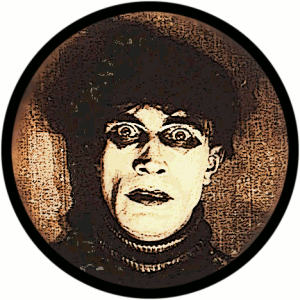 The dead person’s spirit is stolen by the Bocor who turns the body into a mindless slave. Bocors are the “bad witches” of Voodo, as opposed to the “good witch” leaders called the Houngan.
Tell My Horse is a strange and fascinating attempt to explain the West Indian Obeah practices. It is weird – and at times disgusting – and definitely an acquired taste. Scholars will find it useful, but I do not think its antiquated style holds much appeal for the general reader.
Fortunately, it is a very different book from Hurston’s other stellar work!
(Photos: Public Domian)
Copyright © 2022 | KitPerriman.com | All Rights Reserved
Marie Laveau
(Dr. John)
Now there lived a conjure-lady, not long ago,
In New Orleans, Louisiana – named Marie Laveau.
Believe it or not, strange as it seem,
She made her fortune selling voodoo and interpreting dreams.
She was known throughout the nation as the Voodoo Queen.
Folks come to her from miles and miles around,
She sure know how to put that, that voodoo down.
To the voodoo lady they all would go,
The rich, the educated, the ignorant, and the poor.
She’d snap her fingers and shake her head,
She’d tell them about their lovers – living or dead.
Now an old, old lady named widow Brown,
Asked why her lover stopped coming around,
The voodoo gazed at her and squawked
I seen him kissing a young girl up at Shakespeare’s Park
Hanging on an oak tree in the dark.
Oh Marie Laveau, Oh Marie Laveau,
Oh Marie Laveau, Oh Marie Laveau,
Marie Laveau, the Voodoo Queen,
From way down yonder in New Orleans.
Ya, ya, ya – ya, ya, ya – ya, ya, ya – yaaaaa
Now old, old lady, she lost her speech,
Tears start to rolling down her checks,
Voodoo say, “Hush my darling, don’t you cry,”
I make him come back, by and by.
Just sprinkle this snake dust all over your floor,
I’ll make him come back Friday morning when the rooster crow.”
Now Marie Laveau she held them in her hand,
New Orleans, Louisiana was her promised land.
Quality folk, come from far and near,
This wonder woman for to hear.
They was afraid to be seen at her gate,
They’d creep through the dark just to hear their fate.
Holding dark veils over their head,
They would tremble to hear what Maria would say.
Marie Laveau, Oh Marie Laveau,
Marie Laveau, Oh Marie Laveau,
Marie Laveau, the Voodoo Queen,
From way down yonder in New Orleans.
Ya, ya, ya – ya, ya, ya – ya, ya, ya – yaaaaa
And she made gris-gris with an old ram horn,
Stuffed with feathers, shuck from a corn.
A big black candle and a catfish fin,
She make a man get religion and give up his sin.
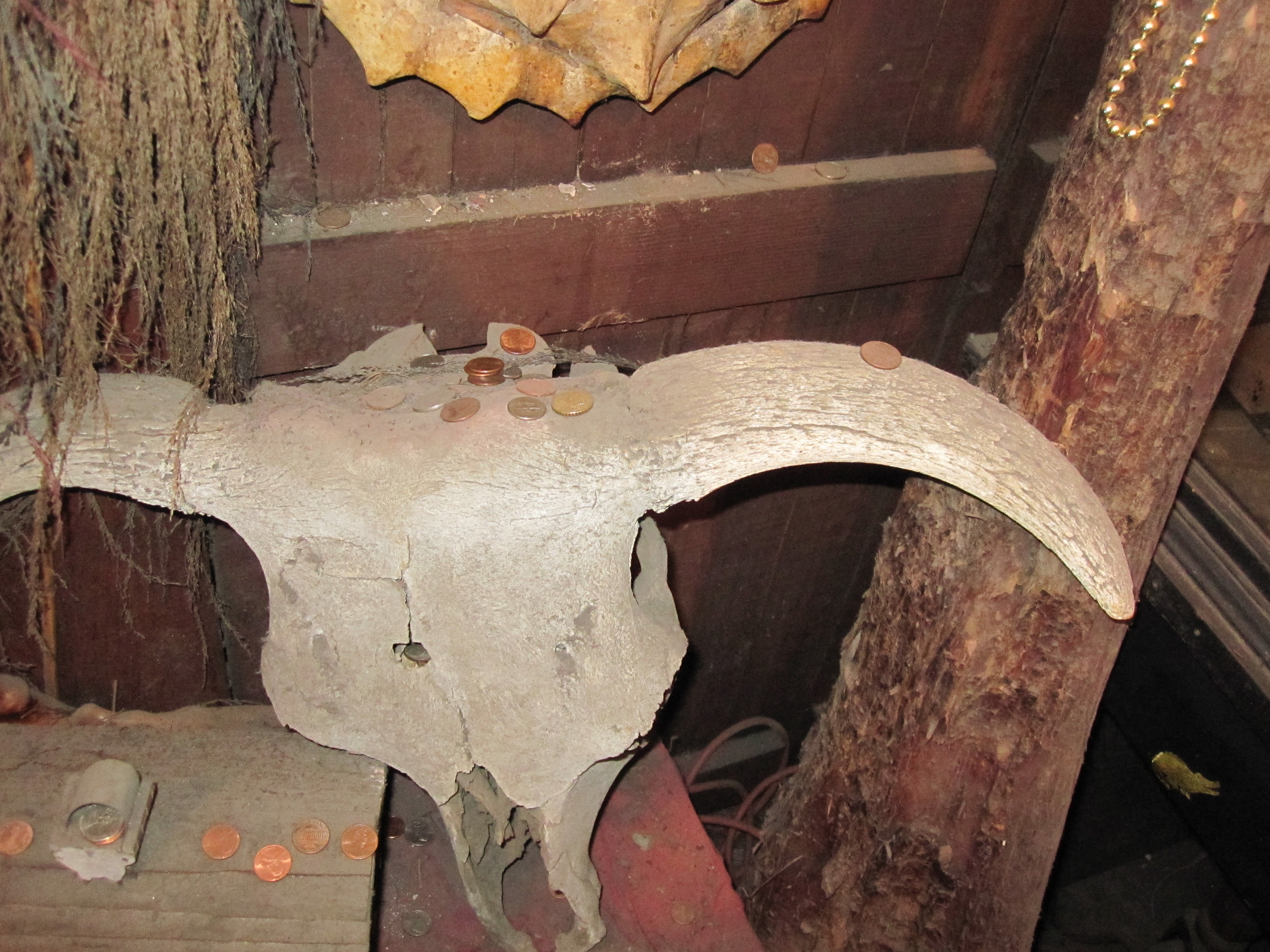
Sad news got out one morning at the break of day,
Marie Laveau had done pass away.
St. Louis cemetery she lay in her tomb,
She was buried one night on the wake of the moon.
Marie Laveau, Oh Marie Laveau,
Oh Marie Laveau, Oh Marie Laveau,
The folks still believe in the Voodoo Queen,
From way down yonder in New Orleans.
Oh Marie Laveau, Oh Marie Laveau,
Oh Marie Laveau, Oh Marie Laveau,
Marie Laveau, the Voodoo Queen,
From way down yonder in New Orleans.
Marie, Marie Laveau, Oh Marie Laveau,
Marie Laveau, the Marie Laveau,
Marie Laveau, the Voodoo Queen.
Check out this version:
(Video: YouTube)
(Photo: Kit Perriman)
Copyright © 2022 | KitPerriman.com | All Rights Reserved
Spanish Train
(Chris De Burgh)
There’s a Spanish train that runs between
Guadalquivir and old Saville,
And at dead of night the whistle blows,
and people hear she’s running still.
And then they hush their children back to sleep,
Lock the doors, upstairs they creep,
For it is said that the souls of the dead
Fill that train, ten thousand deep.
Well, a railwayman lay dying with his people by his side,
His family were crying, knelt in prayer before he died,
But above his bed just a-waiting for the dead,
Was the Devil with a twinkle in his eye,
“Well God’s not around and look what I’ve found,
this one’s mine!”
Just then the Lord himself appeared in a blinding flash of light,
And shouted at the Devil, “Get thee hence to endless night!”
But the Devil just grinned and said “I may have sinned,
But there’s no need to push me around,
I got him first so you can do your worst,
He’s going underground.
But I think I’ll give you one more chance”
said the Devil with a smile,
“So throw away that stupid lance,
It’s really not your style –
Joker is the name, Poker is the game,
we’ll play right here on this bed,
And then we’ll bet for the biggest stakes yet,
the souls of the dead!”
And I said “Look out, Lord! He’s going to win,
The sun is down and the night is riding in,
That train is dead on time, many souls are on the line,
Oh Lord, He’s going to win.”
Well, the railwayman he cut the cards
And he dealt them each a hand of five,
And for the Lord he was praying hard
Or that train he’d have to drive.
Well, the Devil he had three aces and a king,
And the Lord, he was running for a straight,
He had the queen and the knave, and nine and ten of spades,
All he needed was the eight.
And then the Lord he called for one more card,
But he drew the diamond eight,
And the Devil said to the Son of God,
“I believe you’ve got it straight,
So deal me one, for the time has come
To see who’ll be the king of this place.”
But as he spoke, from beneath his cloak,
He slipped another ace.
Ten thousand souls was the opening bid,
And it soon went up to fifty-nine,
But the Lord didn’t see what the Devil did,
And he said “That suits me fine.
“I’ll raise you high to a hundred and five,
And forever put an end to your sins”,
But the Devil let out a mighty shout, “My hand wins!”
And I said “Lord, oh Lord, you let him win,
The sun is down and the night is riding in,
That train is dead on time, many souls are on the line,
Oh Lord, don’t let him win.”
![the-chess-players[1]](https://kitperrimanthehill.com/wp-content/uploads/2015/09/the-chess-players1.jpg) (Painting: Moirts Retzch)
(Painting: Moirts Retzch)
Well that Spanish train still runs between,
Guadalquivir and old Saville,
And at dead of night the whistle blows,
And people fear she’s running still.
And far away in some recess
The Lord and the Devil are now playing chess,
The Devil still cheats and wins more souls,
And as for the Lord, well, he’s just doing his best.
And I said “Lord, oh Lord, you’ve got to win,
The sun is down and the night is riding in,
That train is still on time, oh my soul is on the line,
Oh Lord, you’ve got to win!”
Check out this creative slideshow version below!
(Video: YouTube)
Copyright © 2022 | KitPerriman.com | All Rights Reserved
 Kit Perriman