Love Spells

Which rhymes and chants were traditionally used for casting romance spells?  And does any method guarantee success?  A few clues exits in the rare books of magic and the ‘voluntary’ confessions extracted during various witch trials.

In De Occulta Philosophia the famous magician Agrippa (1486-1535) suggests that potions which include bizarre animal ingredients —  cat brain, wolf penis, and frog bones — are the most effective.   But the everyday spells cast by love-struck maidens were generally more innocuous.

Love Spell 2

From Mother Bunch’s Closet Newly Broke Open (by T.R.), Joyce Froome quotes the words used for piercing an apple with three pins and placing it under the pillow:

If thou be he that must have me

To be thy wedded bride,

Make no delay but come away

This night to my bedside. 

In the years of religious confusion following the Reformation, British Wise Women seem to have sprinkled their spell with a mix of paganism and papist terminology, perhaps believing that their banned Catholic rites still contained magic powers.  Old Chattox (one of the Lancashire Witches) confessed in her trial documents to using charms such as this one ( although this wasn’t actually a love potion):

Three Biters hast thou bitten,

The Hart, ill Eye, ill Tonge:

Three bitter shall be thy Boote,

Father, Sonne, and Holy Ghost

 a Gods name.

Five Pater-nosters, five Avies,

and a Creede,

In worship of five wounds

of our Lord.

Yet young girls of that era who wished to dream of their future husbands would say a Pater Noster (Lord’s Prayer) for each pin stuck in their sleeves before going to bed on St. Agnes’ Night, showing that religion and magic were firmly entwined in popular medieval culture.

Or on St. Thomas’ Eve, unwed girls might prick an onion with nine pins while chanting:

Good St. Thomas, do me right,

Send me my true love this night,

In his clothes and his array

Which he weareth every day. 

Love Spell 1

By the early Twentieth Century love spells had become less toxic and more in harmony with the natural world.  Froome explains how The Book of Charms and Ceremonies recommends placing willow catkins in the mouth before saying:

I eat thy luck

I drink thy luck

Give me that luck of thine

Then thou shalt be mine.

Today, however, love potions usually resemble herbal teas.  Here is one example from a “book on Druidic practices”:

1 pinch of rosemary

2 teaspoons of black tea

3 pinches of thyme

3 pinches of nutmeg

3 fresh mint leaves

6 fresh rose petals

6 lemon leaves

3 cups of pure spring water

Sugar

Honey

This potion should be made on a Friday during the waxing moon, in an earthenware or copper tea kettle.  Before drinking, the lover should recite:

By light of moon waxing I brew this tea
To make [lover’s name] desire me.

 Then they should drink some of the tea and say:
Goddess of love, hear now my plea
Let [lover’s name] desire me!
So mote it be
So mote it be. 
(links2love.com)

On the following Friday the lover should make more tea and share it with the person they desire who will then fall in love with them!

This brief summary shows a changing trend from the olden days, when young women wished to see who they would wed in harmless dreams, to cunning folk mixing dubious love potions.  During times of religious unrest, ancient prayers and traditional sacred rites were used but these were gradually replaced with herbs, roots, and mystical items from the natural world.

Rohypnol 2 mg box

Herbal teas seem harmless enough, but the suggestion to “share it with the person you desire” has become an increasingly sinister idea in this modern pharmaceutical era.  For many years men have used alcohol as a makeshift “love potion” to seduce unworldly women, but since date-rape drugs like rohypnol, ketamine, and gamma-hydroxybutyrate (GHB) are available to those who know where to look, it is increasingly easy to ensure that the object of their desire cannot say no.

Love potions were always designed to make an unknowing or unwilling person comply with someone else’s wishes.  Unfortunately, date-rape drugs have now made it much easier for the predator to succeed!

 Sources:

Dyer, D.G. “Agrippa” in Man, Myth, and Magic (London: BBC, 1970)

Froome, Joyce. Wicked Enchantments: A History of the Pendle Witches and Their Magic (Lancaster: Carnegie, 2010)

“Love Potion Tea” available at http://www.links2love.com/love_potion.htm  (accessed 2/16/2015)

Potts, Thomas. The Wonderfull Discoverie of Witches in the Countie of Lancaster (London, 1613)


(Pictures and photos: Public Domain)

Copyright © 2022| KitPerriman.com | All Rights Reserved
Love-Nut Magic

Go Love-Nuts on Valentine’s Day!

If you can’t choose between two lovers, then here’s a trick to try – but it must be done either on Saint Valentine’s Eve or at All Hallows:
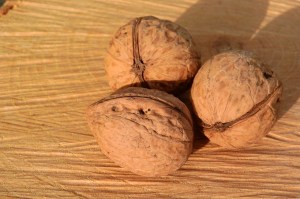
“Light a fire and take three walnuts. Name one for yourself and one for each suitor.

Place the three nuts on the fire with yours in the middle of the other two.
If either nut cracks – or jumps away – that union is not meant to be.
The two nuts that blaze closest together will make the best marriage!”

(Traditional Spell)

(Photo: Public Domain)

Copyright © 2022 | KitPerriman.com | All Rights Reserved
Love Potions

Night hearts

In the run-up to Valentine’s Day let’s talk love potions!  What are they made from?  Who uses them?  Do they work?

In Wicked Enchantments, Joyce Froome describes an array of magical charms used throughout the ages and recorded in the Museum of Witchcraft in Cornwall, England.  These include: sticking a certain number of pins into an apple or onion while chanting a rhyme; specific astrological symbols engraved on a box as a love talisman; carrying henbane root to make you appear more attractive; piercing knotted cords with pins; throwing salt on the fire while reciting a chant on three consecutive Fridays;  melting a wax heart over a hot tile while casting a charm that will bind the lover to your will;  and pushing pins in the sleeve with a prayer for each one so you will dream of your future spouse.  And quoting from The Book of Secrets of Albertus Magnus, Froome explains that a typical magical drink contained items such as periwinkle, houseleek,  and earthworms!

Candle hearts

Over the centuries love potions have appealed to young women in search of a husband; those who’ve lost their sweethearts and wish to lure them back; lovers in search of willing bed partners; and insecure people needing outside support, especially when they’ve already been rebuffed.  Cunning folks were happy to oblige and had a fifty-fifty chance of providing satisfaction, though of course they were conjuring up sexual allure and attraction, rather than genuine love.

There is some scientific research suggesting that modern-day “love potions” may actually affect human mood – for example, those based on odors containing jasmine, rose, and vanilla.  Smells can trigger pheromones and create longing, attraction, or remind the person of happy erotic memories from their past.  Several products on the market contain chemical pheromones which supposedly make the wearer sexually irresistible.  Likewise, in the time before Viagra, certain herbs were used to increase the blood flow and stimulate arousal.  But did they really work?  What do you think?

Source:

Froome, Joyce. Wicked Enchantments: A History of the Pendle Witches and Their Magic (Lancaster: Carnegie, 2010)

(Photo: Public Domain)

Copyright © 2022 | KitPerriman.com | All Rights Reserved
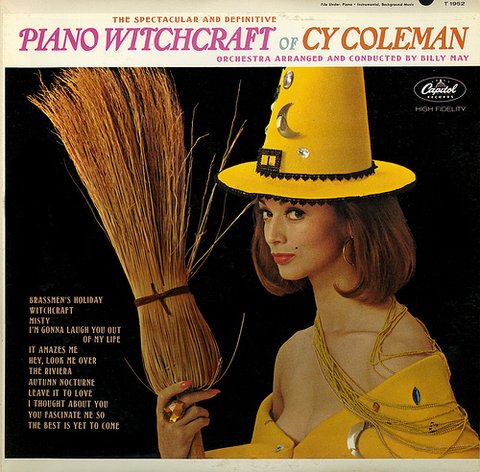
Cy Coleman’s Witchcraft

Coleman

WITCHCRAFT

(Cy Coleman and Carolyn Leigh)

Those fingers in my hair,

That sly come-hither stare,

That strips my conscience bare,

It’s witchcraft.

And I’ve got no defense for it,

The heat is too intense for it,

What good would common sense for it do?

Because it’s witchcraft, wicked witchcraft,

And although I know it’s strictly taboo,

When you arouse the need in me

My heart says “Yes indeed,” in me

Proceed with what you’re leading me to.

It’s such an ancient pitch,

But one that I wouldn’t switch,

Because there’s no nicer witch than you. 

Because it’s witchcraft, that crazy witchcraft,

And although I know it’s strictly taboo,

When you arouse the need in me

My heart says “Yes indeed,” in me

Proceed with what you’re leading me to.

It’s such an ancient pitch,

But one that I’d never switch,

Because there’s no nicer witch than you.

(Photo: Public Domain)

(Video: You Tube)

Copyright © 2022 | KitPerriman.com | All Rights Reserved
 

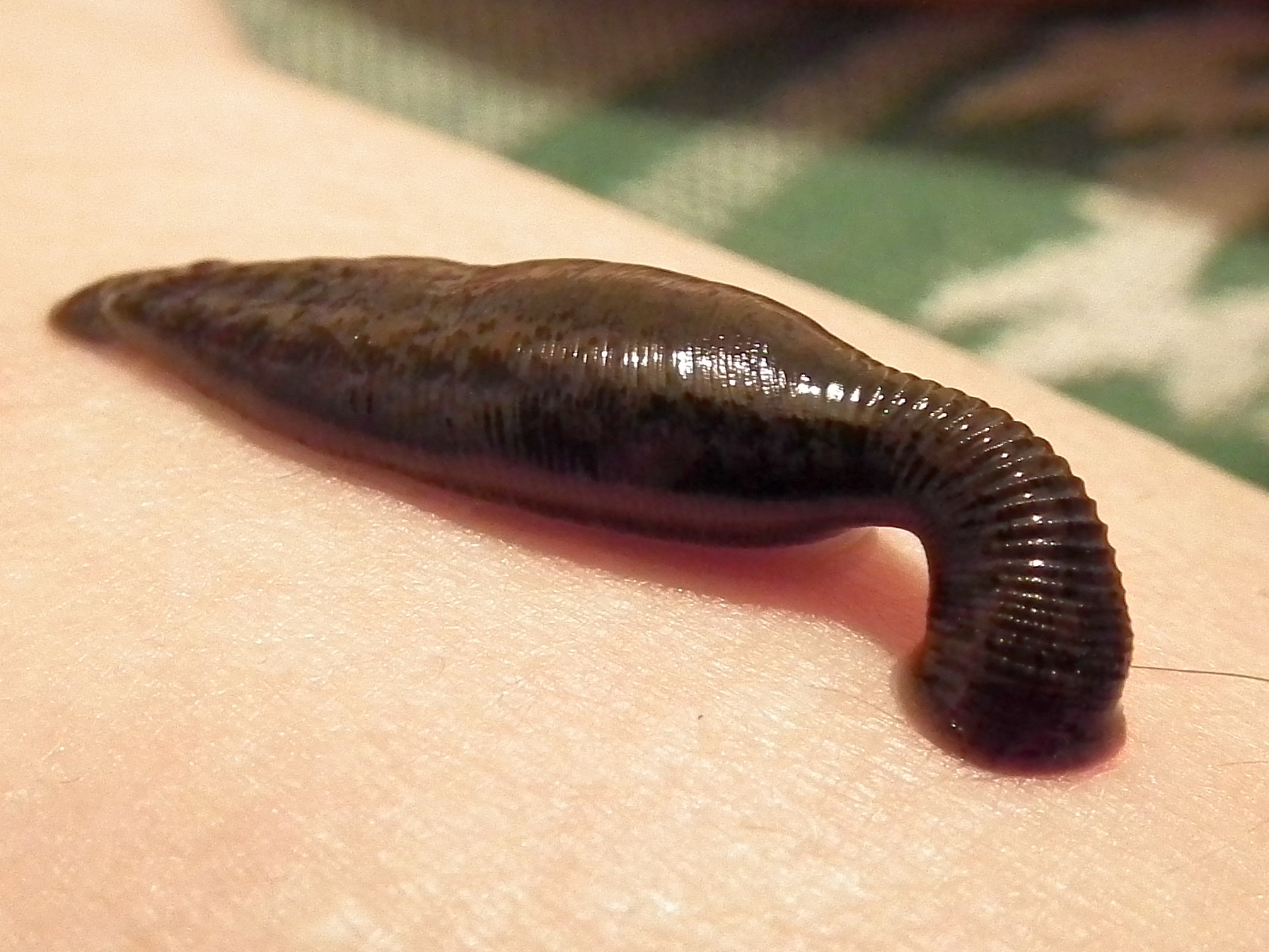
Nature’s Vampires: 25 Things You Need To Know About Leeches

Sucking_leech

I read recently that leeches are still being used in plastic and micro surgery.  Their first reported use appears in Sanskrit writings that date back 2,500 years.  Here are 25 facts that you probably didn’t (ever want to) know:

1.  The Ancient Greeks adopted the practice of leeching to balance the four humors in Galen’s theory of the human body.

2.  The majority of leeches live in fresh water, although there are a few marine varieties too.

3.  They have suckers on each end of their bodies.

4.  Leeches are hermaphrodites.

5.  Most species have a 3-bladed jaw that slices through the skin of the host.

6.  Hirudo Medicinalis – medical leeches – have three jaws with approximately 100 sharp teeth at the rim.

7.   They store blood up to 5 times their body mass.

8.  Medical leeches only need to feed twice a year because they have a super-slow digestive system.

9.  The European variety were so popular in the 19th Century that they actually became endangered.

10. Leeches attach themselves to feed, but fall off naturally to digest the host’s blood once they are bloated.

11.They feed between 20 minutes – 2 hours.

12. The safest way to remove these parasites is by using a blunt object to break the seal of their suckers.

13. If they are shocked from the host they regurgitate their stomach contents, which often causes infection in the bite.

14. Leech saliva makes wounds bleed more readily.

15. The anticoagulant in their spit is called hirudin.

16. Leech bites generally don’t hurt because they also release an anesthetic when they penetrate the skin.

17. Wounds itch as they heal.

18. Leeches come in brown, black, and dark green colors.

19. They vary from 1″ (2.5 cm) – 12″ (30cm) in length.

20. Leeches lay eggs in cocoons.

21. In cold or dry spells they hibernate by burying themselves in the mud until conditions improve.

22.  They have poor vision, but a highly-developed response to touch and vibration.

23 Many species are nocturnal.

24. Rainforest leeches are not aquatic.   They thrive in vegetation and feed of warm-bodied hosts.

25. The use of leeches in US medical procedures was FDA approved in 2004.

In leech-rich areas these tiny vampires will drop from their hiding places and inch towards you like something from a horror movie . . .

and the thought of plastic surgery drops even further down my to-do list!

(Photo: Public Domain)

Copyright © 2022 | KitPerriman.com | All Rights Reserved
Olde English Raspberry Crumble

Raspberry Crumble

Ingredients

1lb fresh raspberries

2oz white sugar

1/2 pint water

8oz plain flour

pinch of salt

6oz butter

4oz brown sugar

2oz chopped walnuts

20z rolled porridge oats

knob butter or margarine

Method

1. Heat the oven to 350 / 180 / gas 4.   Grease a large baking dish with the knob of butter or margarine.

2. Wash the raspberries.  Place them in large pan.  Add the water and white sugar.  Heat gently until the water boils.

3. Stir well for two minutes.  Turn off the heat, but leave the raspberries cooking in the pan.

4. In a large mixing bowl sift the flour and add the salt.  Chop up the butter into small pieces and rub in until the crumble topping looks like large breadcrumbs.

5. Stir in the brown sugar, chopped nuts, and porridge oats.  Mix thoroughly.

6. Place the raspberries inside the greased baking dish.

7. Add the crumble topping.  Smooth out.  Press into the edges of the dish to seal the fruit mix below.

8. Bake in the middle of the oven for 30-45 minutes, until the topping is crisp and the edges turn brown.

9. Cool before serving.

This tasty dessert is great with fresh whipped cream, pouring cream, vanilla ice cream, or English custard.  The raspberries can be replaced with blackberries, strawberries, blackcurrants, gooseberries, rhubarb, or apples! 

(Photo: Kit Perriman)

Copyright © 2022 | KitPerriman.com | All Rights Reserved

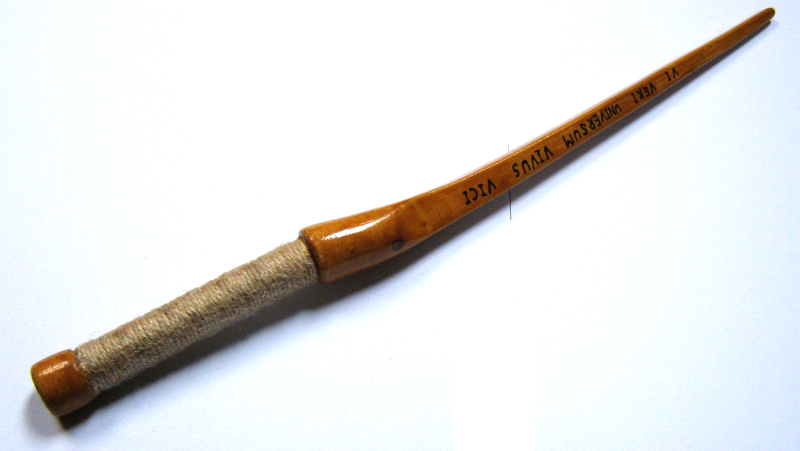
The Wizard’s Wand

wood wand

The Harry Potter book series made magic wands the must-have addition for any aspiring wizard.  But what exactly are they? Do they work?  And if so, how?

In J.K. Rowling’s world, wands are mystical tools made from a wide variety of wood.  At the core is a magical talisman from some mythical creature such as a phoenix feather, dragon heartstring, or unicorn hair.  And as Hermione tells Harry, you do not choose the wand – the wand chooses you.  Rowling’s sticks contain supernatural powers that assist the youngsters in casting various spells and seem inspired by a few elements from European folklore and a good deal of literary license!

Traditionally, the wand was associated with wizard’s staff and the monarch’s scepter and may have first originated as a phallic symbol.  It has also been suggested it derived from the shaman’s drumming sticks, which were widely used as pointers in magical ceremonies.  The first literary reference appeared in Homer, when Circe used a wand to turn Odysseus’ men into wild pigs.

But how do the facts differ from the fiction?

* Wands are usually made from wood, but they can also be made of stone or metal depending on the type of spell required.  For example, copper wands are used in healing.

* These rods are tools used to focus the power of the wizard, but they do not work magic by themselves.  They guide and direct human energy to the proper, desired place.

* Wands are associated with the element of air (and sometimes fire).

* Spirals are sometimes incorporated into their design to represent the beginning and end of everything.  They also create a vortex that harnesses energy.

* Each wand is unique.  They are quasi-sentient – inanimate objects with animate characteristics.

* They can be used for protection, empowerment, healing, and love spells.

* Beginners should use flexible wands made from ash or willow.  Experts may graduate to hard woods like ebony and oak.

* Wands need to be cleansed on a regular basis to keep their energy strong and pure.

* They can be recharged in sunlight or full moonlight.

* Power builds up in the handle and is released through the tip.

* Whatever you send out to others comes back three times stronger – therefore a magician should always send out blessings instead of curses!

 But do they actually work?  You tell me . . .

Sources:

“Wand” – Wikipedia.  Accessed 4/2/2015.

http://www.magicwandsofwizardry.com.  Accessed 4/2/2015.

(Photo: Public Domain)

Copyright © 2022 | KitPerriman.com | All Rights Reserved
The Ancient Rushbearing Festival

Rushbearing.

Rushbearing

Rushbearing is an old Lancashire custom from the early Middle Ages that still survives in a few rural areas today.  It began as an annual Catholic festival to rededicate the local parish church, and soon developed into a day-long village celebration.  In olden times, the floors of churches were made of packed earth.  These were covered with rushes, herbs, and grasses to provide a sweet-smelling insulation against the cold and damp – a practice that continued until flagstones were finally installed.  One day a year, at the end of summer, or on the Saint’s Day associated with a particular church, the old rushes got swept away and new ones were put in their place.

Over time, this religious ceremony developed into a community festival that contained many carnival elements.  The rushes were harvested and dried out several weeks in advance, and then fashioned into a bee-hive decoration on the official rushbearing cart – a float also adorned with garlands and flowers.  The cart was traditionally pulled by all the young bachelors of the parish, and a village maiden chosen as the Rushbearing Queen rode on top.  The procession was often accompanied by banners, Morris Men, street performers, dancers, bands, and minstrels.

The day began with a slow progress through the crowded streets.  Those towns that did not use an official cart appointed several Rush Maidens instead, who carried a white sheet containing the new rushes.  Once they arrived at the church everyone ceremoniously helped to spread out the fresh flooring.  It was originally customary to ring the church bells, and to provide wine, ale and cake for the rushbearers – but the ceremony later developed into a day-long drunken revel, which unfortunately encouraged a lot of criminal activity.

By 1579, this festival had become so bawdy that Queen Elizabeth 1st outlawed the custom, disapproving of the drinking and frolicking taking place in local churchyards.  It was reestablished by King James 1st as part of the “diverting exercises” endorsed in his Book of Sports. 

Rushbearing can be seen each August at Newchurch-in-Pendle.  Other Lancashire towns have replaced the ceremony with similar village processions such as Club Day or Carnival Day.

Sources:

Ashworth, Elizabeth. Tales of Old Lancashire (Berkshire: Countryside Books, 2007)

Wiki: “Rushbearing” Accessed on 4/6/2015

(Painting: Public Domain)

Copyright © 2022 | KitPerriman.com | All Rights Reserved

Macbeth’s Weird Sisters: Reason or Treason?

Macbeth’s Weird Sisters

A Psychological Riddle:

Were Shakespeare’s weird sisters real evil hags who seduced the newly-appointed Thane of Cawdor with ambitious promises above his station?  If so, could they have been the reason why the brave warrior Macbeth murdered King Duncan?

Points to consider:

* Superstitious Jacobeans believed in magic, and would have readily accepted that Macbeth was genuinely bewitched.  Satan was stalking the land in search of souls and his coven of witches found a good, brave man who succumbed to their temptations because he was also human.

* If you were put under a spell, you had no control over your actions.  Therefore, once Macbeth was in their power he could not prevent himself from killing the king.

* The Malleus Maleficarum claimed that wicked women have been responsible for the downfall of great men since the time of Eve in the Garden of Eden.  Macbeth was following in a long tradition of doomed heroes.

* The three sisters first approach Macbeth.  He does not initially seek them out.  This implies that Macbeth was intentionally targeted by Satan, which makes him a hapless victim of evil.

* Banquo sees the women too.  They were not just a figment of Macbeth’s imagination.

Fuseli

Painting by Henry Fuseli (Public Domain) 

Or perhaps the witches were merely a convenient excuse?  In other words, did they exist only in the mind/s of the central character/s – as a projection of ambition and desire – or as a psychological attempt to rationalize the ultimate treason?

Points to consider:

* If Macbeth was truly a good man he would not have been so readily tempted by evil.  Satan picks targets who are easy to seduce. The witches were the excuse he used to explain away his actions.

* The ambition to be king may have been seeded in Macbeth’s mind even before the witches appeared.  It was common to come across poor wise women, gypsies, or cunning folk, who made a living from fortune telling.  After the murder they were fashionable targets to blame for the deeds that Macbeth was destined to do.

* Supernatural influences can be used to explain, excuse, and justify horrific acts on the grounds that they are outside of self control.  In the same way that mass murderers claim to hear voices that make them commit their crimes, Macbeth blames the popular scapegoat of his (and Shakespeare’s) time.

* If Macbeth was genuinely bewitched he would have killed without deliberation.  But he questions his actions, later wrestling with guilt and remorse.  Is this because he knows he has done wrong and fears being found out?

* Banquo sees the weird women and also hears their prophecies, in which case he should also fall under their power.  But he is content to let fate play out by itself and does not take part in any murders.

I have always been fascinated by Shakespeare’s skill as both a writer and early psychologist.  His audience would have accepted these characters as real supernatural influences (which means Macbeth was an innocent man duped by evil).  But the bard also knew the human mind.  In today’s psychoanalytical society we understand how criminals sometimes project their crimes onto external influences to escape from blame (in which case Macbeth would have been guilty of murder and treason).

Copyright © 2022 | KitPerriman.com | All Rights Reserved