Kit’s Crit: Magic In Western Culture (Brian P. Copenhaver)

Copenhaver

Magic In Western Culture: From Antiquity to the Enlightenment (New York: Cambridge UP, 2015)

Brian Copenhaver’s Magic In Western Culture traces occult beliefs From Antiquity to the Enlightenment.  His study starts in Ancient Iran, Greece, and Rome, and moves through the early Christian Church to the influential thinkers of the Renaissance.  Magic is treated as a tradition that derives from classical philosophy, as Copenhaver examines why European intellectuals “repudiate magic in the Enlightenment, after having previously accepted it for more than two millennia” (xiii).

Copenhaver suggests that before the Enlightenment most educated Western people believed in magic – a tradition handed down from Herodotus.  But the early Catholic Church claimed any supernatural activity in The Bible was the result of divine miracles (not earthly magic), which created little problem until Thomas Aquinas insisted that if there were heavenly angels there must also be hell’s counterparts – demons.  Thereafter, devils were seen as tempting the faithful with magic powers and turning them into witches.   This belief persisted into the Middle Ages and beyond.

As further medical advances were made, traditional magic was superseded by new therapies – regimen, pharmacy, and surgery.  Doctors of Physic practiced a natural philosophy whereby physical treatment (not ritual or religious) aimed to produce the correct mix of humors in the body.

During the Renaissance, natural philosophy gradually gave way to mechanical science, particularly after the invention of the telescope and microscope.  Men like Descartes favored reason, method, and metaphysics over occultism, but this was not a clear-cut process.  Isaac Newton, for example, spent much of his scientific career as an alchemist searching for the Philosopher’s Stone, and was later called “the last of the magicians” (288).  But over the centuries, magic gradually succumbed to the dual pressures of religion and science until it fell out of fashion with the European intellectuals.

Magic In Western Culture is a dense, scholarly book, lightened in part by the rich illustrations.  Copenhaver has sifted through the murky realms of early belief to piece together a well-researched, cohesive analysis of the occult tradition.  His section on Newton is particularly fascinating.  I also enjoyed the references to Shakespeare’s plays that highlight the intersection between intellectual development and common folklore.

If you have an academic or historic interest in the rise and decline of magic you will find this book an impressive read.  Highly recommended!

Copyright © 2022 | KitPerriman.com | All Rights Reserved

Comfits: Before There Were Jellybeans . . .

Comfits.

In the time before Jellybeans and Fruit Pastilles there were Comfits, a delicious confectionary also known as Sugar Plums.  Comfits took several weeks of painstaking dedication to make, and were often a good cook’s most closely-guarded secret.  There are several modern recipes for Sugar Plums – but here is an original version for those with the perseverance.  Your patience will be sweetly rewarded!

Ingredients

Damson plums

Sugar

 Comfits Painting by George Flegel (Public Domain)

Method

  1. Wash the plums and remove their stones.
  2. Sprinkle the base of a large cauldron or cooking pot with sugar. Arrange the fruit in layers, covering each layer with a good coating of sugar.
  3. Press down the fruit with a wooden spoon. Place on the lowest heat on a stovetop (or at the edge of the fireplace) until the sugar dissolves without burning. Remove from the heat.
  4. Cover with a lid to protect from insects. Leave undisturbed in the cool larder (not refrigerator) until the juice turns into syrup. This may take up to a week, depending on the outside air temperature.
  5. Bring the fruit to the boil for one minute, then immediately transfer it to an earthenware pot. Cover tightly. Place back inside a cool larder for an additional week.
  6. Roll each plum individually in sugar and place on a baking tray. Cover and leave overnight.
  7. Repeat the process with each damson daily, for one week, until the fruit has absorbed as much sugar as possible.
  8. On the eighth day cook for 30 minutes on the lowest oven setting possible, to dry out any remaining juice.
  9. Again, coat each plum with sugar and leave overnight.
  10. Repeat the 30-minute baking and sugaring process above for three-to-five additional days, until all the plums are completely crisp.
  11. Store in a glass jar with an airtight lid.
  12. Enjoy a delicious taste of the past!

Copyright © 2022 | KitPerriman.com | All Rights Reserved
In Search Of Evil

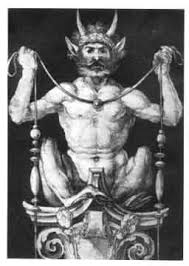
Devil

After recently re-reading William Golding’s Lord of the Flies, I am again left questioning the origins of evil.  Golding takes the classical stance that there is good and bad in everyone – the angel on one shoulder and the devil on the other – yet he ultimately remains pessimistic about human nature and the fate of civilization.  Golding sides with the philosopher Thomas Hobbes, suggesting that the “life of man” is “solitary, poor, nasty, brutish and short.”  But where does this wickedness come from?

It can be argued good and evil are human psychological concepts, projected onto outside active agents.  People need something other or outside to worship, fear, or blame — something beyond their own selves — and so they unconsciously create, and then personify, supernatural forces.  The semantic origins of God being Good and Devil being Devil supports this theory. These powers are then courted, worshipped, and offered sacrifices, in an attempt to secure individual favors.

By turning something other into the wicked outside element, communities can maintain an image of themselves as chosen or blessed.  They are then able to avoid looking too carefully at their own souls, may deny personal responsibility, and can point the finger of blame at a scapegoat: the witch, beast, devil, bogeyman, or whatever.

Over time, encounters with the supernatural have either turned into folk legends or been expanded into organized religions.  The eternal battle between good and evil was then mythologized in morality tales that showed folk how to live together in civilized societies, or served as warnings against giving in to selfish desire.

I  find myself agreeing with Golding’s conclusion that the beast dwells within us all.  As the Lord of the Flies tells Simon: “You knew, didn’t you?  I’m part of you?  Close, close, close! I’m the reason why it’s no go? Why things are as they are?”

What are your thoughts on evil?

(Picture: Public Domain)

Copyright © 2022 | KitPerriman.com | All Rights Reserved

Magic Or Medicine?

Magic Or Medicine?

Doctors / Physicians

Doctor   Hans Brock der Altere (c. 1584)

Throughout history, people have consulted doctors to diagnose and treat their ailments, but educated physicians were rare, expensive, and often dangerous. There was no understanding of how germs spread disease.  Indeed, well into the seventeenth century practitioners still followed Galen’s Greek notion that the body was made up of four humors – blood, phlegm, yellow bile, and black bile – and when one of these fluids got out of balance the body fell sick.  Leeches and blood-letting were common practices because fevers were thought to originate from having too much blood in the body.

Barber-surgeons

Quack  Franz Anton Maulbertsch (c. 1785)

The first barber-surgeons were monks who aided parishioners in their monasteries.  They often advocated a heavy dose of fasting and prayer to accompany their herbal remedies.

Later on, barber-surgeons  were found on battlefields tending the wounded.  In the age before anesthetics, surgery was considered a lowly occupation and these quacks performed many of the procedures that physicians refused to do, including barbaric amputations, teeth-pulling, enemas, and blood-letting for those who could not afford a physician.

Apothecaries

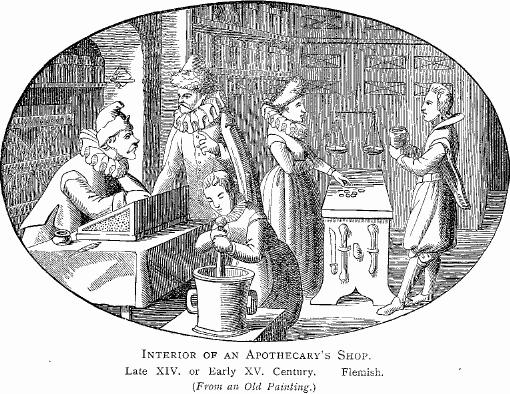
Apothecary

If a person knew what was wrong and merely required a cure, they could visit the apothecary.  These were early pharmacists who made medicines, salves, and potions, and also gave out advice on surgery and midwifery.  Their tonics consisted of herbs, minerals, animal parts, urine, honey, and a variety of fats.

Cunning Men and Wise Women

Cunning Folk

If you could not afford any of the above, a cure might be found with a folk-healer.  Cunning men and wise women used magic, prayer, herbal lore, and family experience to tackle the everyday ailments of the townsfolk, villagers, farmers, and their livestock.  They were cheaper than apothecaries and could be paid by trading goods instead of money.  The cunning folk also provided an array of services for specific problems that could be dealt with very discretely – contraceptive powders, abortion, love potions, impotence cures, and poisons.

Some of the more unfortunate – or unpopular – cunning folk got caught up in the witch hunts that swept across Europe throughout that period.  But when people began realizing these healers were not only useful, but necessary, new regulations appeared that differentiated between good magic and bad.  Lighter sentences were handed out – time spent in the pillory or jail – and capital punishment was only awarded to witches – those in league with demons, who conjured up devils or committed murder.

By the end of the Seventeenth Century extensive advancements had been made.  William Harvey discovered how the heart controls blood circulation in the body; Ambroise Pare made important breakthroughs for treating war wounds; Marcello Malpighi invented the microscope; and the first blood transfusions were carried out at the Royal Society in London.  But it took a great many years for these advancements to permeate throughout England.  In the meantime, the common people continued to pray and turn to the wise women for help!

(Pictures: Public Domain)

Copyright © 2022 | KitPerriman.com | All Rights Reserved

Drops of Life

It is not

that I am afraid of death

and of leaving

a half-dripped life

with all of those loose spitting drops

entombing the forever –

It is

barely understanding

how precious

each strum

on the wick has been,

how very fragile that flame.

(Kit Perriman)

(Photo: Kit Perriman)

Copyright © 2022 | KitPerriman.com | All Rights Reserved
Kit’s Crit: Lord of the Flies (William Golding)

Golding

Lord of the Flies

William Golding’s Lord of the Flies (1954) tops my list of all-time favorite books!

In the wake of a nuclear war, a group of school boys are being evacuated from England when their aircraft is shot down.  The survivors land on an isolated tropical island with no adult presence.  Here,they have to fend for themselves. The children ultimately form two rival gangs and soon cross the line from civilization into savagery.

There are three main reasons why Lord of the Flies is the perfect novel.  Firstly. it is an allegory that makes readers question their moral, spiritual, anthropological, and psychological beliefs about childhood innocence.  Secondly, Golding produces a beautiful cocktail of modern and poetic language where every sentence advances the action, or reveals something important about one of the central characters. And thirdly, he incorporates mythology, magical realism, anthropological research, religion, and psychology to build up the tension with carefully crafted foreshadowing and symbolism.  This is a very tight, taut, controlled horror story full of unpredictable events, where the only relief comes right at the end.

Lord of the Flies exposes the darkness of the human condition.  It is a pessimistic examination of everything we hold sacred.  And that is why it so wonderfully terrifying.

Copyright © 2022 | KitPerriman.com | All Rights Reserved

Boggarts and Bogeymen

Boggart

(Picture: Public Domain)

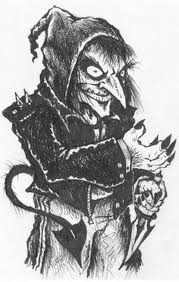
Boggarts have terrified English country-folk for hundreds of years.  Particularly feared in Lancashire,  they were said to haunt the fields, woods, and marshes – sometimes stealing away naughty children.  The term Boggart derives from the Middle English bug meaning ghost, hobgoblin, or object of terror (OED).

According to those who have seen these spirits, Boggarts come in many shapes and sizes.  Sometimes they appear as ugly humans, while others have described them as beast-like creatures.  Everyone, however, seems to agree that they are hairy, strong, have strange eyes, and sometimes resemble devils.

Tradition says that if a Boggart is given a name it becomes destructive and unreasonable, rather than simply mischievous.  Perhaps for this reason these sprites are often referred to generically as The Bogeyman. 

While they have sometimes been held accountable for poltergeist activity inside the home, Lancashire Boggarts prefer the outdoors – they scare people with eerie noises, overturn farm items, sour milk and ale, lame animals, and leave behind weird hoof-prints.  They also get blamed when children or travelers go missing.

So how do you ward off Boggarts and Bogeymen?

Stay away from the places they roam, especially at night.  And hang a horseshoe over the front door of the house – or leave a pile of salt outside your bedroom.

Sweet dreams!

Horseshoe The Golden Horseshoe (William Michael Harnett)

 Sources:

Wikipedia: “Boggarts” accessed 3/28/2015

The New Shorter Oxford English Dictionary (Oxford: Clarendon,1993)

Copyright © 2022 | KitPerriman.com | All Rights Reserved

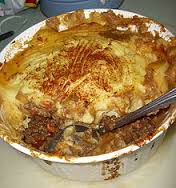
Olde English Cottage Pie v. Shepherd’s Pie.

I am often asked what the difference is between Cottage Pie and Shepherd’s Pie.  They are essentially the same recipe, except for the type of meat at the base.  Shepherd’s Pie uses minced lamb, so it has always been popular in sheep farming communities.  Cattle-rearing areas generally prefer minced beef instead, to make Cottage Pie.  Both versions are nourishing but can be rather bland.  So here is my own tasty version, developed from my Great Grandmother’s recipe to spice things up.

Ingredients:

5lb potatoes

Pinch of salt

Knob of butter for greasing dish

1oz butter

2 tablespoons of milk

1lb lean minced meat (lamb or beef)

2 tablespoons virgin olive oil

1 clove crushed garlic

1 finely chopped onion

3 carrots, cut into rounds

1/2 pint beef stock

6oz tomato paste

1 tablespoon mixed herbs

2 tablespoons Worcestershire sauce

4oz grated cheese

Shepherd's Pie

(Photo: Public Domain)

Method:

1.  Preheat the oven 350/ 180 /gas 4.

2.  Grease a 2-pint ovenproof dish with the knob of butter.

3.  Peel the potatoes and place in a pan of water with the pinch of salt.  Boil until soft.

4.  Heat the virgin olive oil in a large saucepan to boiling.  Add the garlic, chopped onion, and meat.  Stir until thoroughly browned.  Add the carrots.  Stir well.

5.  Slowly mix in the beef stock.  Then pour in the tomato paste and Worcestershire sauce.  Add the mixed herbs and stir.

6.  Reduce to a medium heat.  Cook for 20 minutes until the carrots are soft.  Remove from the stove.

7.  Drain the boiled potatoes. Mash with 1oz of butter.  Add the 2 tablespoons of milk and whisk to a creamy consistency.

8.  Place the meat mix in the ovenproof dish and spread flat.  Cover with a layer of grated cheese.

9.  Spread the mashed potato evenly over the top of the cheese, taking care to seal the edges so  that the meat will not bubble over.

10. Place the dish in the center of the oven for 20 – 30 minutes to heat through.  Brown the top layer under a high grill for 5 minutes for a crunchy topping.

Serve with fresh garden peas or sweet corn.  Enjoy!

Copyright © 2022 | KitPerriman.com | All Rights Reserved

The “Witch” Church

Newchurch

Newchurch-in-Pendle is an ancient village in the North of England, close to where several of the Lancashire Witches once lived and roamed.  It has been a religious center since Druid days, with the first Christian building appearing around 1250.  In 1544, a stone chapel was dedicated by the Bishop of Chester, possibly with the original tower.  Then a gallery was added in 1915, though the current St. Mary’s Church that stands here today has been restored and renovated many times since throughout the centuries.

Graveyard (2)

The most fascinating feature is the carving on the west face of the tower (under the clock face) – a large eye said to symbolize the all-seeing Eye of God.  In earlier years though, this may have been a talisman to ward off evil from the local cunning folk who were forced by law to attend services here every Sunday.  Today, St. Mary’s is also one of the few remaining churches that still celebrates the medieval Rushbearing Festival with a special service each August.

Graveyard (1)

The graveyard contains the headstones of many old families.  The Nutter plot (dated 1694) likely contains the  descendants of Alice Nutter, one of the witches executed in 1612.  From this consecrated soil, another witch – Old Chattox – supposedly stole twelve teeth that she later traded with her rival, Old Demdike.

In later times the village funeral processions were led by two black horses, and when these were spotted coming over Nanny Maud Hill the church bells began tolling The Passing Bell.

The Bone Room opens onto the graveyard, and for many years served as the Charnel House – a place where human remains were stored.  These were skeleton parts that had either been dug up by accident, or intentionally removed to make room in a plot for fresh bodies.

St. Mary’s Church is one of two major landmarks to have outlived the old belief in magic.  The other – providing its majestic backdrop – is the famous Pendle Hill.

Hill

(Photos: Kit Perriman)

Sources:

Clayton, John A.  A History of Pendle Forest and the Pendle Witch Trials (Lancashire: Barrowford Press, 2007)

Stansfield, Andy. The Forest of Bowland & Pendle Hill (Devon: Halsgrove House, 2006)

“St. Mary’s Church, Newchurch in Pendle.”  Wikipedia, accessed 3/23/2015

Copyright © 2022 | KitPerriman.com | All Rights Reserved
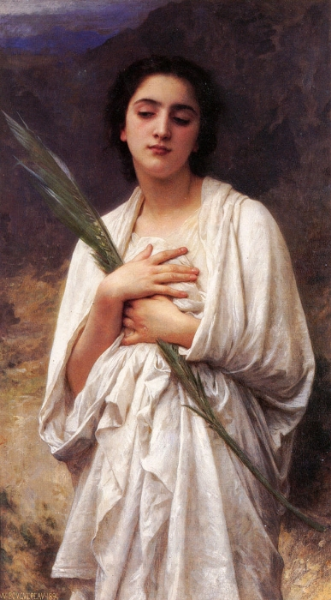
The Goddess Within

 goddess

When they thought us wicked, we were really wise

In the Burning Times of world despise,

They named us as tricksters, blamed things dark and worse,

Called cunning and wile a demon’s curse.

Heaven and the Underworld, summoned at will,

Crept on cat-paws to nurture or thrill,

Reading vain futures – balancing humors –

Attending births and healing tumors.

Folklore has always survived the Dark Ages . . .

They’ll never destroy the timeless Sages.


(Kit Perriman)

(Picture: Public Domain)

Copyright © 2022 | KitPerriman.com | All Rights Reserved